
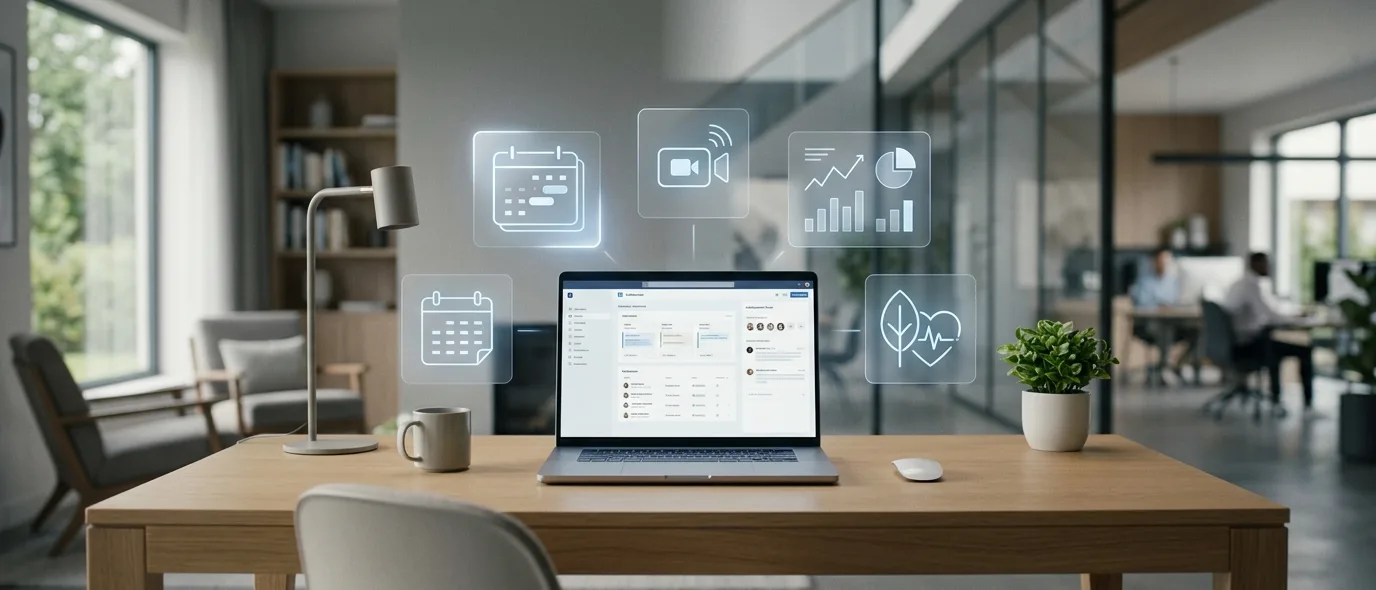

In 2020, working from home felt like a privilege. By 2026, asking someone to give it up feels like a threat.
Something fundamental shifted not just where people work, but what they expect work to feel like. And companies are still figuring out how to respond.
The Numbers Don’t Lie
Remote work didn’t quietly fade after the pandemic. It dug in.
Today, 36.2 million Americans work remotely either fully or partially, and 52% of remote-capable employees follow a hybrid schedule, making it the dominant model for knowledge workers in 2026. Fully on-site roles have dropped from 83% in 2023 to just 66% now.
This isn’t a perk anymore. It’s a baseline.
For job seekers in 2026, flexible work isn’t a nice-to-have; it’s the expectation. And the numbers back that up: 29% of employees say they would look for a new job if their role became fully in-person. Companies like Amazon that enforced strict return-to-office mandates faced exactly those attrition spikes and talent pipeline challenges that followed shortly after.
The debate has quietly shifted. Leaders aren’t asking whether remote work works anymore. They’re asking how to manage it better.
The Productivity Myth Settled
For years, managers worried that employees at home weren’t really working. The data has put that to rest.
A Stanford study published in Nature found zero negative impact on performance for hybrid workers, alongside a 33% drop in employee turnover. 90% of employees report they are just as productive or more in a hybrid setup. And 66% of managers now say they’ve seen productivity increase.
Yet 85% of business leaders still struggle to fully trust that offsite employees are productive. The gap between what managers feel and what the data shows remains one of the biggest friction points in modern workplaces.
“The problem was never productivity. It was visibility. And those are two very different things.”
The Hidden Cost: Burnout Is Real
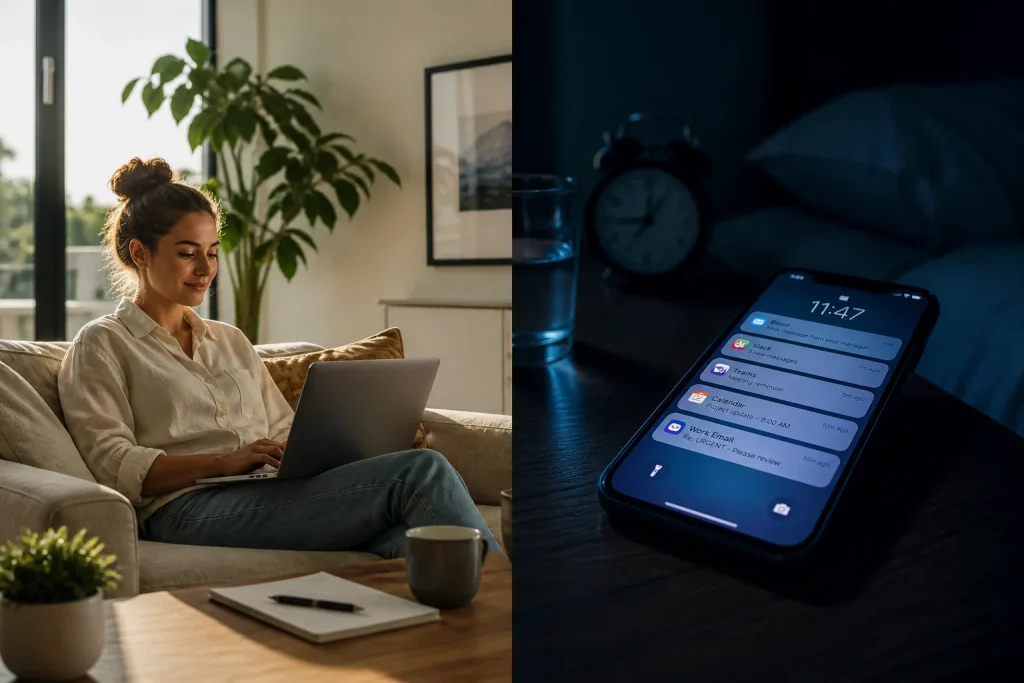
Here’s the tension no one talks about enough.
The same flexibility that improves work-life balance is poorly managed, quietly fuelling burnout. 86% of full-time remote workers report burnout, with 81% checking work emails outside regular hours. When the office is your home, the line between the two disappears.
Burnout costs businesses an estimated $322 billion annually in lost productivity worldwide. Burned-out employees are nearly three times more likely to plan to leave within a year.
Gen Z is feeling it hardest. Nearly 66% of workers aged 18–27 report burnout, the highest of any generation, and nearly 1 in 5 say they simply cannot disconnect after work hours.
This might not seem like a structural problem at first. But it is. Freedom without boundaries isn’t freedom, it’s just a different kind of pressure.
Hybrid Is the Sweet Spot But It Needs Structure
The data points clearly in one direction: hybrid works best, but only when it’s intentional.
Fully remote workers report 61% burnout. Hybrid workers report 57%. In-office workers report 55%, but also report higher loneliness and lower trust from management. Remote workers are twice as likely as in-person workers to say their management trusts them.
The model that wins isn’t fully remote or fully in-office. It’s a structured hybrid with what researchers call “anchor days,” where teams coordinate in-office time together rather than showing up randomly. These produce measurably better collaboration than unstructured arrangements.
AI is also stepping in here. 73% of companies now use AI tools to monitor productivity, detect early burnout signals, and improve performance reviews, shifting from tracking hours to tracking outcomes.

Key Takeaways
- Hybrid is the new normal, 52% of remote-capable workers are already there, and the trend is holding steady despite RTO mandates.
- Productivity isn’t the issue, Stanford’s data confirms hybrid workers perform just as well, with significantly lower turnover.
- Burnout is the real threat, 86% of fully remote workers report it, driven by blurred boundaries and an always-on culture.
- Structure matters more than location; intentional hybrid models with coordinated in-office days outperform both extremes.
- AI is reshaping remote management, shifting the focus from surveillance to outcomes, and from hours to wellbeing.
Conclusion
The office didn’t disappear. It just stopped being the only option.
What 2026 is teaching us is that flexibility alone isn’t enough. The companies getting it right aren’t the ones with the most generous remote policies, they’re the ones who paired flexibility with clarity. Clear expectations. Intentional structure. An actual answer to the question: what does showing up look like when no one is watching?
The future of work was never about the location. It was always about trust.
And the workplaces that figure that out, quietly, without mandates, are the ones people won’t want to leave.
