
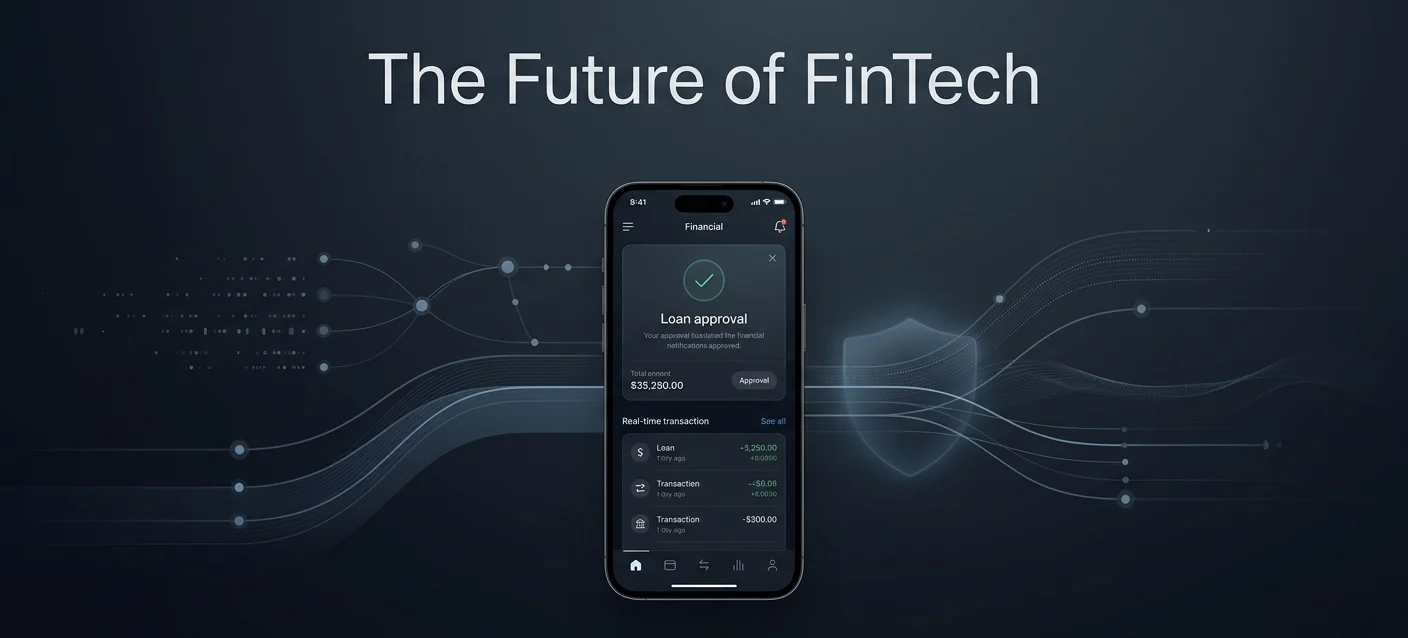

You applied for a loan.
Forty-eight hours later, maybe three days, someone called you back with an answer.
That same process now takes eight minutes. Not because banks got faster.
Because AI stopped waiting for humans to do things humans were never great at in the first place.
Why 2026 Is Different
Finance has always moved at the speed of trust, which, historically, meant slowly. Paperwork. Approvals. Committees. Waiting rooms.
2026 is changing that from the ground up.
AI in financial services isn’t a feature anymore. It’s the infrastructure. The global fintech market generated approximately $650 billion in revenues in 2025, growing at 21% year over year, and AI is the accelerant behind nearly every trend driving that growth.
But the real story isn’t the numbers. It’s what’s actually changing and how quietly it’s reshaping the way money moves, gets protected, and gets personalised.
1. From AI Assistants to AI Operators
For the past few years, AI in banking meant a chatbot answering basic questions. Helpful, sure. Transformative? Not quite.
That era is over.
2026 marks a clear shift from generative AI to agentic AI, autonomous systems that complete multi-step tasks without human intervention. Financial institutions are moving from AI “assistants” to AI “operators. An agentic AI doesn’t just answer “what’s my balance?” It initiates payments, runs fraud checks, resolves disputes, and drafts compliance reports, without a human touching a single step. Automated customer support now resolves over 70% of tickets without involvement.
The back-office work that once required entire departments is now running continuously, silently, and at a fraction of the cost.
“The back-office work that once required entire departments is now running continuously, silently, and at a fraction of the cost.”
2. Fraud Detection That Doesn’t Sleep
Financial services is the most targeted industry for AI-powered cyberattacks.
The irony is that AI is also the best defence against itself.
AI in fintech has reached 88% adoption among top performers, driving a 40% reduction in fraud losses. These aren’t rule-based systems flagging unusual postcodes. They’re models that learn transaction behaviour, detect anomalies in real time, and block suspicious activity before a payment even settles.
Fraud prevention used to be reactive; someone got scammed, then the bank investigated. Now the system intervenes before the money moves. That’s not a small upgrade. That’s a fundamental shift in how financial safety works.
3. Your Bank Finally Knows You
Here’s what most people don’t notice: financial products have been generic for decades. One savings rate. One credit offer. One interface, for everyone.
That’s the end.
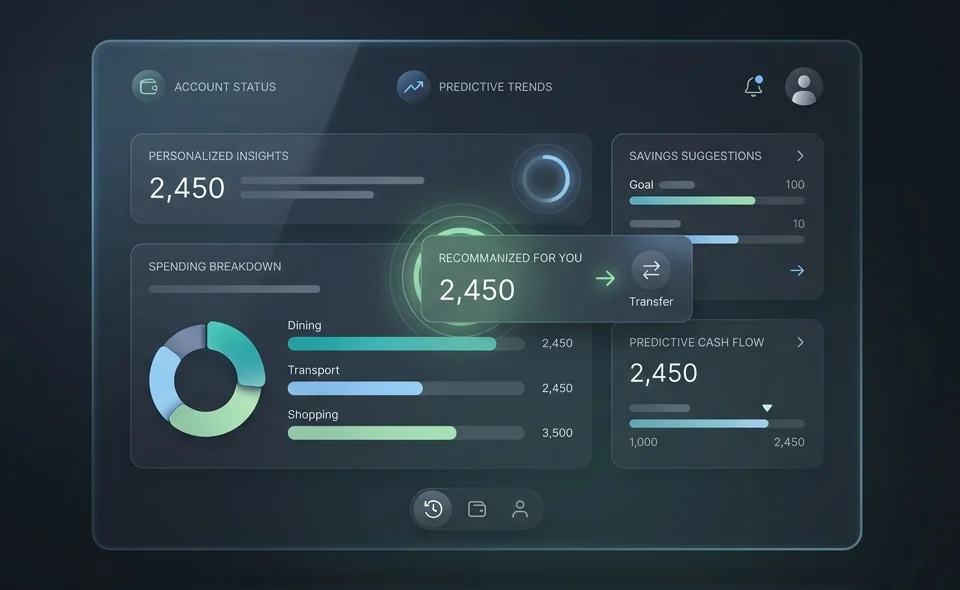
Hyper-personalisation powered by open banking data is enabling fintechs to offer recommendations with accuracy that wasn’t possible before. AI analyses spending patterns, predicts cash flow crunches, and suggests savings strategies tailored to individual behaviour, not customer segments.
Open finance is the engine underneath this. By 2026, full interoperability between banks, fintechs, and third parties will become the norm. Individuals can now share their full financial profile, investments, pensions, and insurance to get smarter advice across the board.
The shift is significant. Finance is moving from products that fit most people to products that fit you.
“Finance is moving from products that fit most people to products that fit you.”
4. Stablecoins Step Into the Mainstream
Stablecoins were once a crypto niche. In 2026, they are becoming practical financial infrastructure.
With the US GENIUS Act now in place and Europe’s MiCA regulation creating a unified licensing framework, the regulatory ambiguity that kept institutions cautious is largely gone. Banks and fintechs are integrating stablecoins for faster cross-border settlement, liquidity management, and B2B payments, where transactions that once took days can now settle in seconds, at lower cost.
This might not feel dramatic to everyday users yet. But the pipes are being replaced underneath the surface, and when that’s done, everything that runs through them gets faster.
Key Takeaways
- Agentic AI now executes entire financial workflows autonomously from loan approvals to compliance reporting.
- AI fraud detection has cut losses by 40% among top performers, shifting protection from reactive to real-time.
- Hyper-personalisation powered by open banking data is replacing one-size-fits-all financial products with individually tailored experiences.
- Stablecoins have moved from speculation to regulated payment infrastructure, enabling faster and cheaper settlement globally.
- The overarching shift: finance is becoming faster, more personal, and increasingly invisible, running quietly in the background of daily life.
Conclusion

Money has always followed trust. And trust, historically, required time.
For generations, that time was the point, the waiting room, the paperwork, the callback, all of it signalled that something careful was happening. In 2026, AI is making that caution invisible. A loan decision in eight minutes. Fraud is blocked before it lands. Payments that cross borders in seconds. Advice that knows your life, not just your credit score.
The firms that win won’t be the loudest. They’ll be the ones that build so well you stop noticing them, platforms that move fast, stay reliable, and get out of the way when they should.
That’s what mature technology looks like. Not flashy. Just present, and quietly indispensable.
Which leaves one question, the only one AI still can’t answer for you:
AI can optimise your money. But it still can’t tell you what it’s for.
