
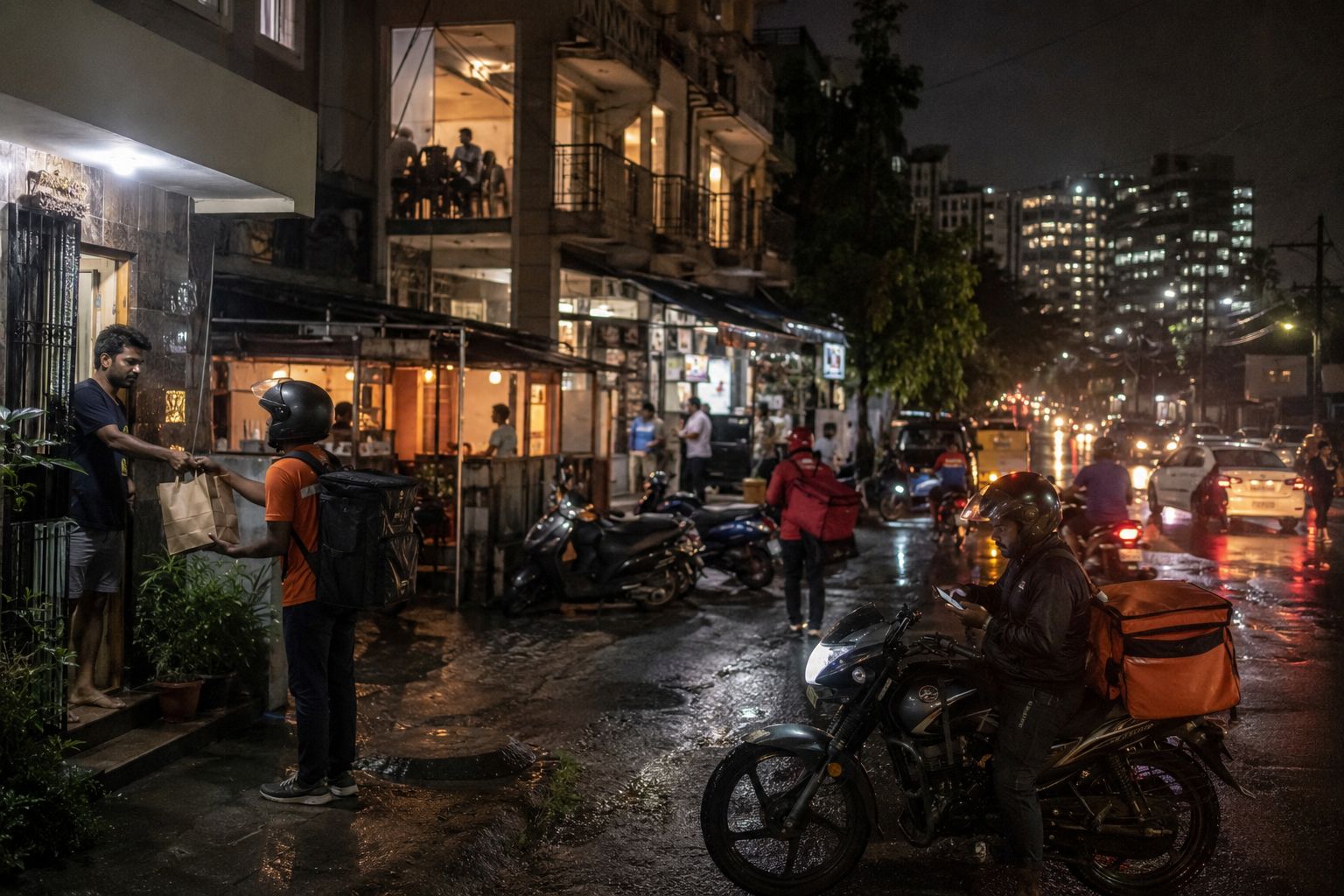

Bangalore has Swiggy, Zomato, EatSure, Faasos, Magicpin, Mealave, and more arriving every year.
They all deliver food. They all fight for the same customer staring at the same hunger at 8 PM. And yet, most of them are still alive.
How? Shouldn’t one of them just win?
Same App, Different Game
When multiple apps occupy the same space, most people assume one will eventually crush the others. But markets rarely work that cleanly, especially in food delivery, where geography, price sensitivity, cuisine preference, and delivery speed all vary wildly from one user to the next.
The real question isn’t who wins. It’s why there’s room for multiple winners at all, and what each player must do to claim and hold their slice.
Why the Market Doesn’t Collapse Into One Winner
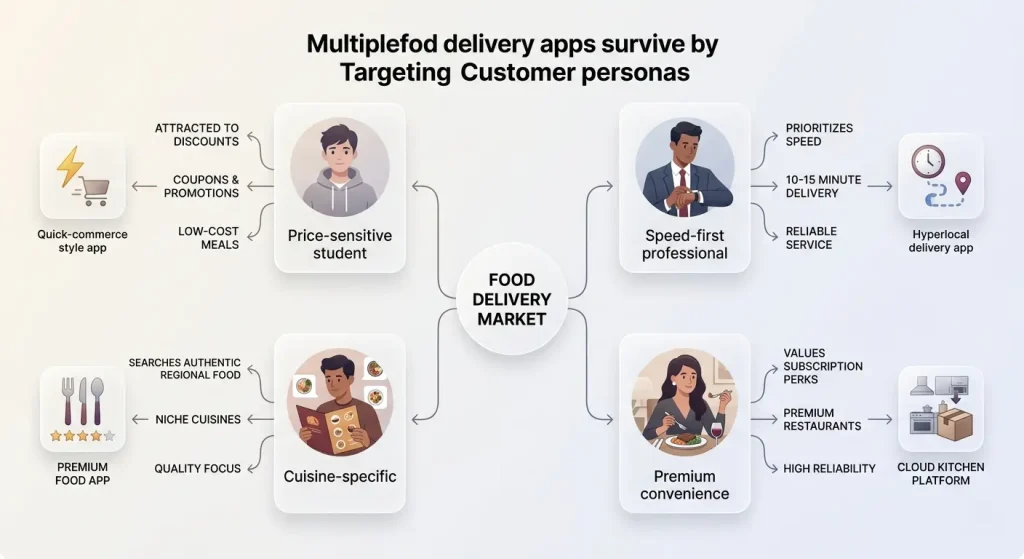
Here’s the thing: food delivery isn’t one market. It’s dozens of micro-markets layered on top of each other.
A student in Koramangala ordering biryani at midnight is a different customer from a family in Whitefield wanting a Friday night dinner. A working professional ordering a ₹150 rice bowl every weekday is not the same as someone spending ₹800 on a weekend with Swiggy One discounts.
Each of these people has a different trigger, different price ceiling, and different loyalty threshold. That’s why multiple apps can coexist; they’re quietly serving different versions of the same need.
The Survival Strategies That Actually Work
1. Owning a niche, not the whole market
EatSure (by Rebel Foods) doesn’t try to out-Swiggy Swiggy. It controls its own cloud kitchens, Behrouz Biryani, Faasos, Oven Story, so it owns the food quality end-to-end. That’s a fundamentally different bet, not competing on discovery, but on consistency.
Magicpin’s MagicNow doubled down on hyperlocal, promising 15-minute delivery within a 1.5–2 km radius. That’s not a feature. That’s a completely different product promise targeting a specific impatience.
2. Expanding the moat quietly
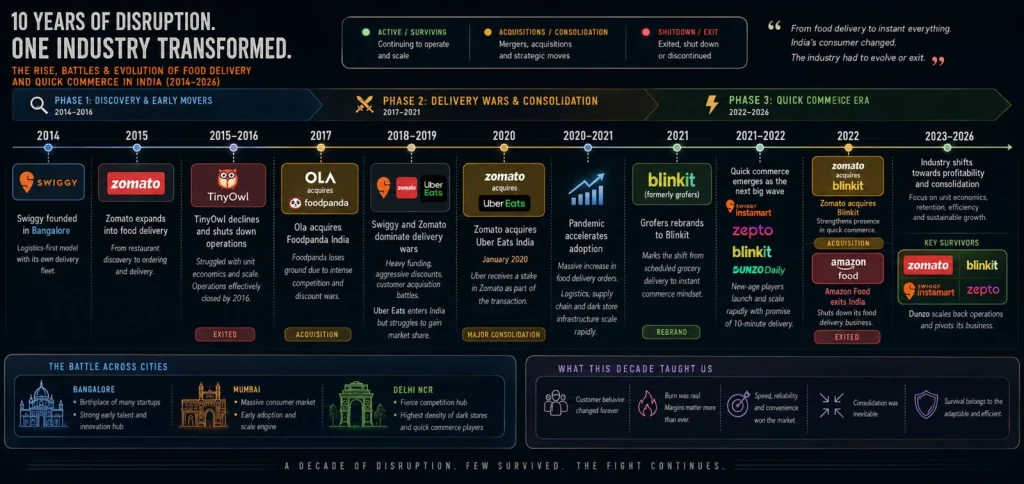
Swiggy launched Instamart for grocery delivery and Swiggy Genie for same-day package delivery, not because food delivery was failing, but because it needed to stay relevant between meals. Each new vertical locks users into the ecosystem and makes switching more painful.
Zomato’s acquisition of Blinkit strengthened its position in quick-commerce, essentially building a second business inside the first. Today, both companies are less “food delivery apps” and more urban convenience platforms.
3. The one move that changes everything, for better or worse
Zomato rolled out a zero-commission policy for restaurant partners, a bold move that made them more attractive to restaurants while pressuring Swiggy’s commission-based model. One strategic decision shifted the power dynamic across the whole market.
But these moves cut both ways. Over a decade, more than five food-tech players, including Foodpanda, Uber Eats, Amazon Food, and TinyOwl, have exited the Indian market. Each of them had capital, brand, and ambition. What they didn’t have was a reason compelling enough for users to switch and stay.
What It Takes to Stay No. 1
Zomato commands 58% market share while Swiggy holds 42%, a duopoly that has settled after years of brutal competition. But being No. 1 doesn’t mean being safe.
Food delivery is operationally intense; it needs massive rider fleets and vast restaurant networks, and as a relatively new sector, it racks up more failures than wins.
Staying on top requires three things simultaneously:
- Keeping costs low enough to stay profitable
- Keeping discounts high enough to retain users
- Keeping service quality consistent enough to earn trust
“Without sustained pricing power and consolidation among restaurant partners, real profitability may remain aspirational.”
Is There Still Room for New Players?
Yes, but not for generalists.
A Bangalore startup called DeliverGreen is experimenting with eco-friendly packaging and short-mile bike deliveries, targeting sustainability-conscious users. Regional cuisine platforms are emerging that serve migrant communities craving home food, Bengali thalis in Bangalore, Tamil-style meals in Mumbai.
These aren’t threats to Swiggy or Zomato. They’re serving a gap the big platforms don’t bother with, and that’s exactly how new entrants survive.
The formula isn’t “build a better Swiggy.”
It’s “find the user Swiggy ignores.“
What the Survivors Figured Out
Every market that looks saturated from the outside is actually a collection of underserved micro-needs on the inside.
The apps that died tried to fight the giants on their own terms: speed, discounts, and restaurant count. The ones that survived found a corner the giants couldn’t or wouldn’t go to.
“The market doesn’t collapse into one winner because no single app can be everything to everyone. The moment it tries, it opens the door for a smarter, smaller competitor.”
Key Takeaways
- Multiple apps survive because food delivery is really many micro-markets, not one.
- Niche ownership (hyperlocal, cloud kitchens, premium, regional) beats head-on competition.
- One strategic move, right or wrong, can reorder the entire competitive landscape.
- Staying No. 1 means solving the hardest equation: scale, margins and loyalty, simultaneously.
- New players still have room, but only by finding users that the incumbents overlook.
Conclusion
Swiggy and Zomato will keep fighting each other. EatSure will keep owning its kitchen. MagicNow will keep betting on 15 minutes. And somewhere in a Bangalore co-working space, two people are probably building the next food app right now.
Not because the market isn’t crowded. But because no market is ever truly full when there’s a user whose need isn’t being met yet.
The real question for any new entrant or any incumbent protecting its lead is simple:
Who are you for?
