


A fintech company gets fined a few lakhs for a compliance lapse.
Sounds minor. But what follows isn’t.
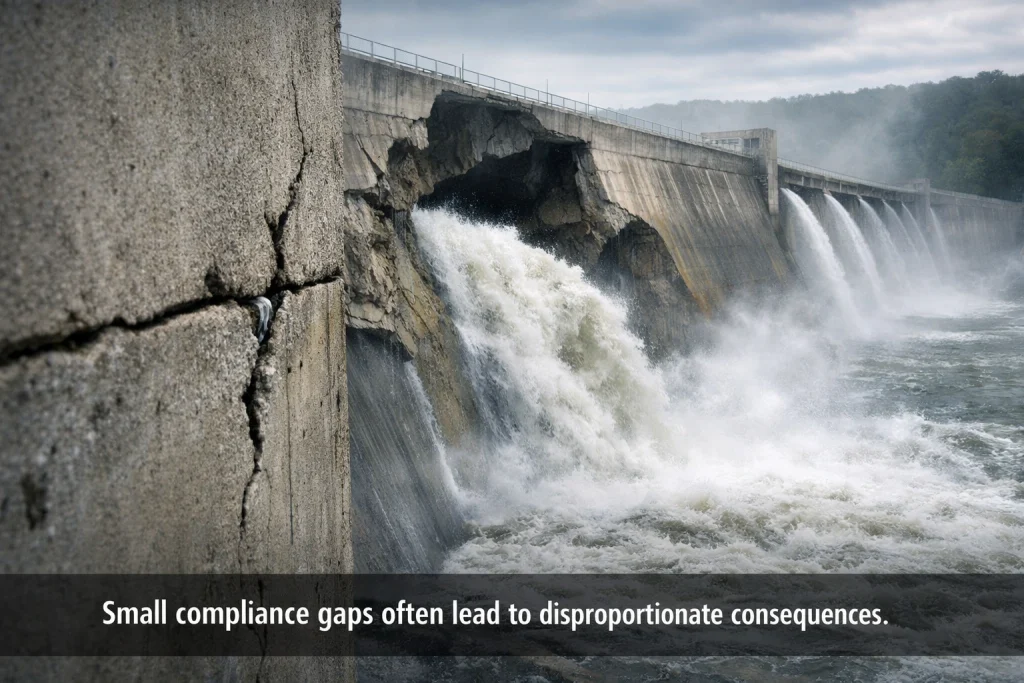
Approvals slow down. Audits increase. Investors hesitate. And suddenly, a small mistake starts shaping the company’s future.
This might not seem like a big deal at first, but it is.
Introduction
In 2026, regulatory non-compliance in tech is no longer just a legal issue. It’s a business risk that builds quietly over time.
As AI systems, fintech platforms, and digital infrastructure become central to operations, regulations are tightening just as fast. At the same time, cybercrime is rising, forcing governments to respond with stricter rules.
The result? Even small compliance gaps can trigger consequences far beyond fines.
The Cost Isn’t Just the Fine
A penalty is the most visible outcome, but rarely the most damaging. Consider a recent case where a fintech company was fined for KYC lapses. The amount was relatively small. But the real impact came after:
- Increased Regulatory Scrutiny
- More Frequent Audits
- Delays in Approvals
Here’s what most people don’t notice:
Once flagged, a company doesn’t simply move on. It operates under a layer of scrutiny that slows everything down.
When Compliance Slows Growth
Non-compliance doesn’t just cost money; it creates friction. Companies dealing with regulatory issues often face:
- Delayed Licensing and Approvals
- Difficulty entering new markets
- Reduced trust from partners
It also affects funding. Investors today don’t just evaluate products; they assess risk. A company with compliance issues may struggle to raise capital, even if its core business is strong.
“Regulatory non-compliance doesn’t stop growth instantly — it quietly blocks it.”
The Financial Ripple Effect
Fines are just the starting point.
Non-compliance creates a chain reaction of costs:
- Legal fees and settlements
- Emergency compliance fixes
- Operational disruptions
- Lost business opportunities
For AI-driven companies, the stakes are even higher.
Non-compliance can lead to:
- Restrictions on AI models
- Data usage limitations
- Increased monitoring costs
This is why compliance is no longer treated as overhead. It’s becoming part of financial planning.
Reputation: The Damage You Can’t See Immediately
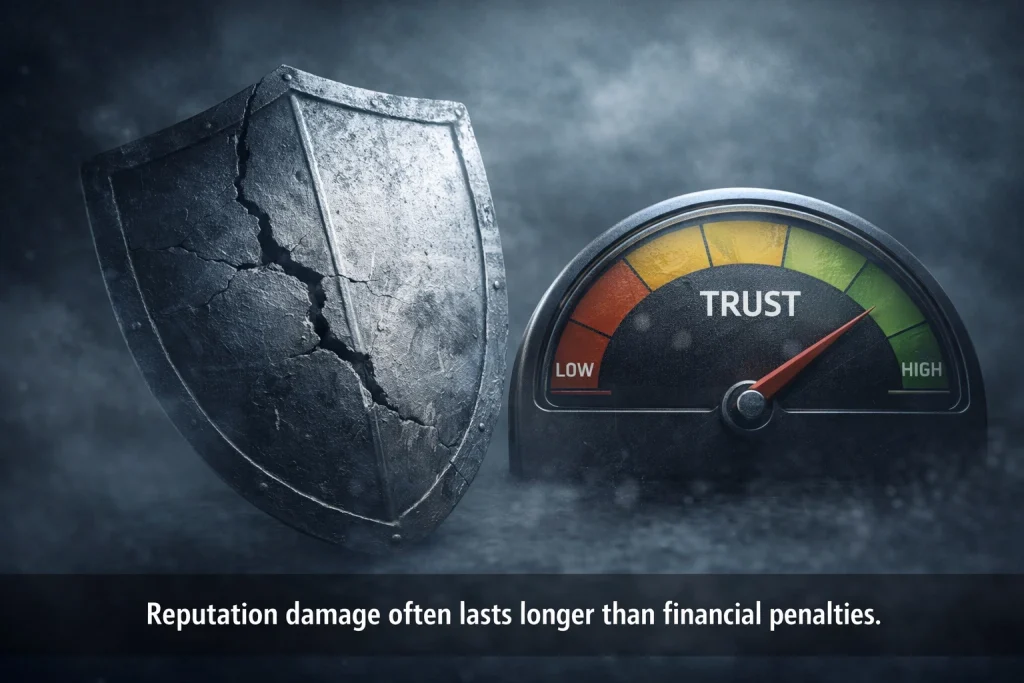
You can recover from a fine. Rebuilding trust is harder.
Regulatory violations often lead to:
- Negative Media Attention
- Customer Hesitation
- Long-term Brand Damage
In industries like fintech and AI, trust is everything.
Once it’s affected, every interaction, customer, partner, investor, becomes harder.
“In tech, trust is currency. Non-compliance quietly devalues it.”
The Compliance Trap
Here’s where things get more complex.
Cybercrime is growing rapidly, but enforcement systems aren’t keeping pace. At the same time, regulations are evolving faster than most companies can keep up with.
This creates a “compliance trap”:
- More rules
- Faster updates
- Less clarity
- Higher expectations
Companies are now expected to continuously monitor systems, respond in real time, and stay aligned with evolving laws. This isn’t just a legal challenge; it affects engineering, security, and operations.
Insight: Compliance Is Now a Design Problem
The biggest shift in 2026 isn’t just stricter regulations. It’s how deeply compliance is embedded into systems. Compliance used to be reactive.
Now it’s built into how products are designed.
- AI Systems include governance layers
- Platforms track and log decisions
- Risk teams work alongside engineers
Here’s the deeper insight:
Non-compliance is no longer just a failure to follow rules; it’s a failure in how systems are built.
Key Takeaways
- Non-compliance costs go far beyond fines.
- It slows growth, funding, and expansion.
- Financial impact includes legal, operational, and opportunity costs.
- Reputation damage is long-lasting and hard to repair.
- Rapidly changing regulations are creating a “compliance trap”.
- Compliance is shifting from legal requirement to strategic function.
Conclusion
Regulatory non-compliance in 2026 isn’t loud, it’s subtle.
It doesn’t always break companies overnight. It slows them down, limits their options, and erodes trust over time.
And by the time the impact is visible, it’s often difficult to reverse. So the real question isn’t:
Can you afford to invest in compliance?
It’s this:
Can you afford not to?
