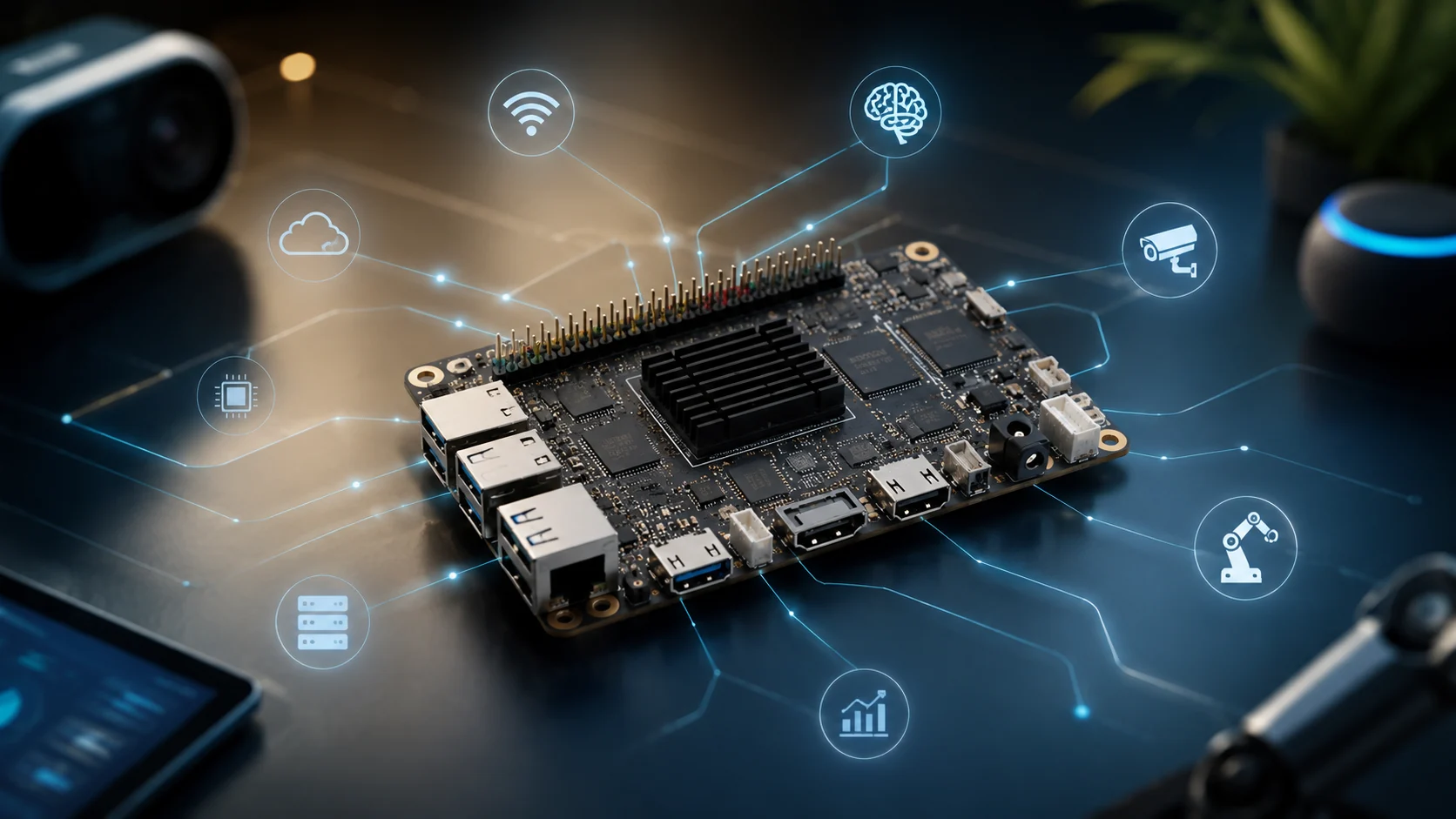

Most people have heard of Raspberry Pi. Far fewer have heard of Banana Pi, and that gap is getting harder to justify.
In 2026, Banana Pi isn’t just releasing boards. It’s releasing boards with WiFi 7, 10 Gigabit networking, and on-device AI that can run a 30-billion-parameter language model, locally, offline, on a palm-sized piece of hardware.
That’s not a hobbyist toy. That’s infrastructure.
What Exactly Is Banana Pi?
Banana Pi is an open-source hardware community backed by Guangdong Bipai Technology, with roots in the maker ecosystem and a growing presence in serious developer and industrial circles.
For years, it sat in Raspberry Pi’s shadow. But 2026 is shaping up differently.
With two major product launches already this year and a community spanning over 100 countries, Banana Pi is moving fast and in directions that matter.
The Router That Actually Means Business
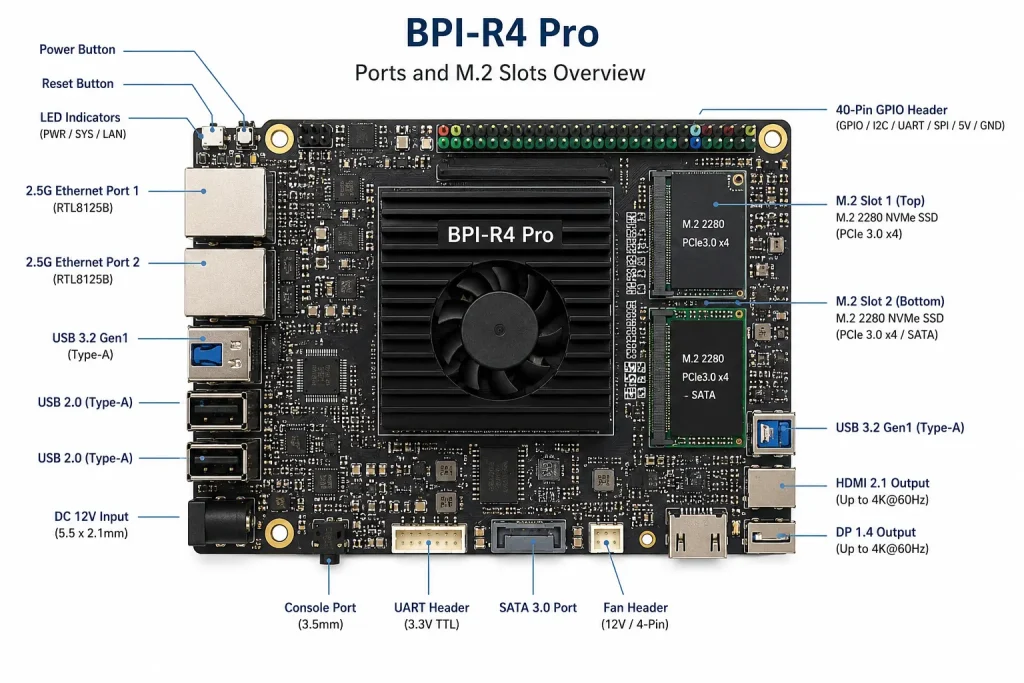
Banana Pi released the BPI-R4 Pro in February 2026, a WiFi 7-capable router board with optional 10 Gigabit LAN and WAN, available in two variants with up to 8 GB DDR4 RAM.
Think of it like this: most consumer routers are sealed boxes you plug in and forget. The BPI-R4 Pro is more like a router you build, fully programmable, expandable, and running on open firmware like OpenWrt.
The Pro version doubles RAM from its predecessor, adds more M.2 expansion slots, and brings a more versatile set of Ethernet and SFP+ options, positioning it as a professional upgrade designed for network developers and engineers.
A developer-grade router running open firmware means full control over your network. No locked firmware, no forced updates, no corporate backdoors.
“A developer-grade router isn’t just a device. It’s a statement about who controls your network.”
The AI Board That Changes the Conversation
In April 2026, Banana Pi made a much bigger announcement.
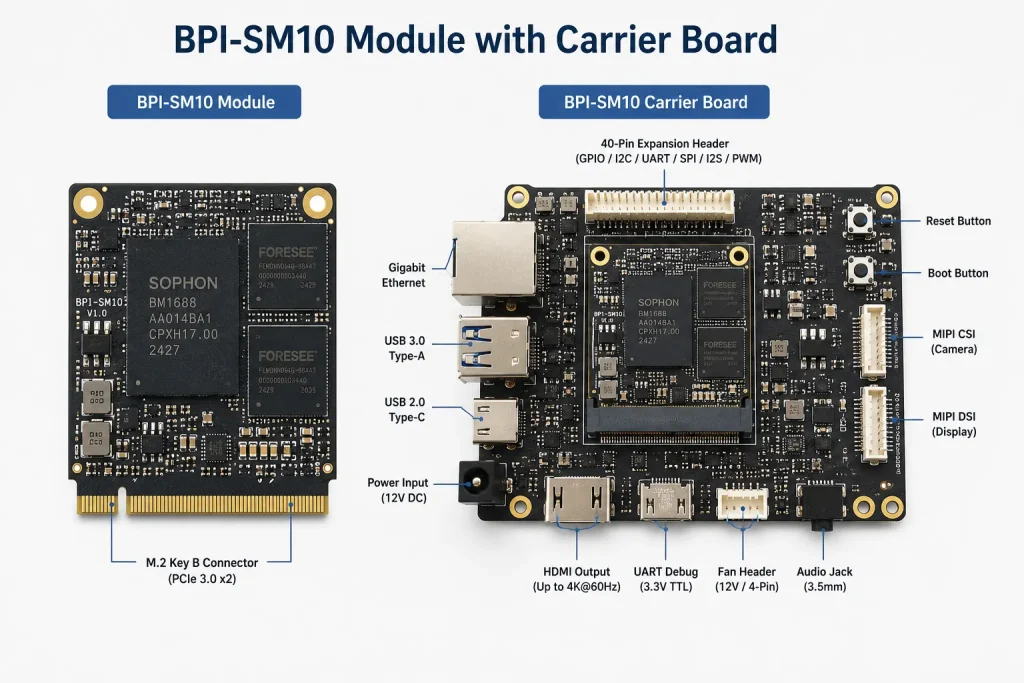
The company officially released the BPI-SM10, a high-end AI computing platform based on the SpacemiT K3 RISC-V AI CPU, delivering 60 TOPS of AI compute and capable of running 30-billion-parameter large models locally at the edge.
Here’s what 60 TOPS actually means in plain terms: this board can run a genuinely capable AI model, the kind that powers chatbots and assistants, entirely on-device, without internet, without a cloud subscription, without sending your data anywhere.
The BPI-SM10 carrier board is also hardware-compatible with Nvidia’s Jetson Orin Nano format, a deliberate move that lowers the mechanical and integration friction for developers already familiar with the Jetson ecosystem.
That’s a smart play. It doesn’t ask developers to rebuild everything from scratch. It meets them where they already are.
RISC-V Is No Longer Just Interesting, It’s Getting Real
Here’s what most people don’t notice: both of Banana Pi’s biggest 2026 launches are built on architectures that weren’t mainstream two years ago.
The BPI-SM10 aligns with the RVA23 profile, a standardised specification for 64-bit RISC-V processors aimed at improving compatibility and reducing fragmentation across the ecosystem.
In simple terms, RISC-V is an open chip architecture, with no licensing fees, no royalties, and no single company controlling the design. And Banana Pi is betting on it early, while others are still watching.
Canonical has also confirmed Ubuntu 26.04 LTS support for RVA23-compliant systems, giving the platform a more credible Linux story than most earlier RISC-V boards.
Software support is often where promising hardware goes to die. Ubuntu backs those changes.
The Bigger Picture
Banana Pi’s 2026 lineup tells a clear story when you step back and read it.
They’re not chasing hobbyists anymore, or at least, not only hobbyists. WiFi 7 routers for network engineers. 60 TOPS AI boards for robotics and industrial edge deployments. RISC-V compute modules for developers who want to own their silicon story.
This is the same path Raspberry Pi walked, starting with curious makers, then growing into data centres, digital signage, and classroom infrastructure.
“The boards that win the maker market today end up powering the edge infrastructure of tomorrow.”
Banana Pi is still early. The software ecosystem is still maturing, community support is still uneven, and some products require real technical know-how to set up. But the direction is unmistakable.
Key Takeaways
- The BPI-R4 Pro brings WiFi 7 and 10 Gigabit networking to an open, developer-programmable router platform.
- The BPI-SM10 delivers 60 TOPS of AI compute and can run 30B AI models locally on RISC-V hardware.
- Banana Pi is actively expanding into edge AI, industrial compute, and open networking, not just maker projects.
- Ubuntu 26.04 LTS support for RISC-V strengthens the software story significantly.
- The hardware is serious; the software ecosystem is still catching up, worth watching closely.
Conclusion
There’s a version of the future where AI doesn’t live in distant data centres, it lives on small boards at the edge of your network, running locally, responding instantly, owned entirely by you.
Banana Pi in 2026 is building toward that version.
They haven’t won anything yet. The community is smaller, the software ecosystem thinner, and the learning curve steeper than the household names. But the hardware they’re shipping this year is asking genuinely interesting questions about what open, powerful, affordable compute can look like.
The real question isn’t whether Banana Pi can compete with Raspberry Pi. It’s whether open hardware can give us an AI future we actually own.
