
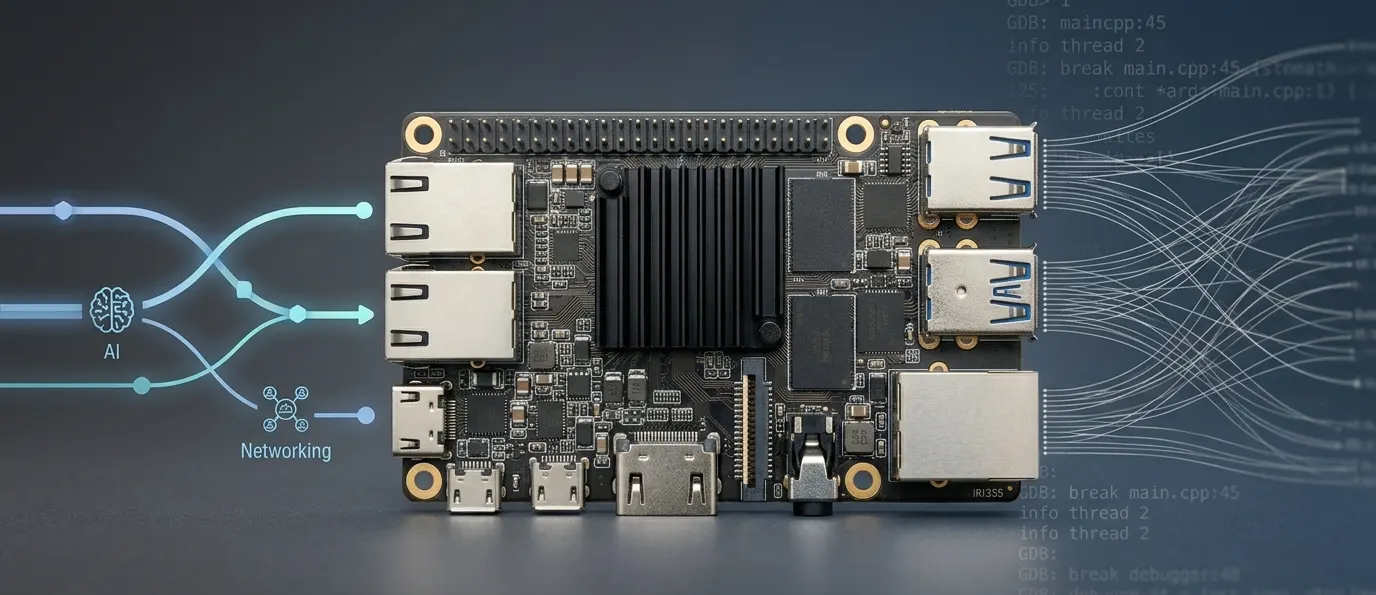

The specifications sheet looks incredible. Twelve cores. Up to 96GB RAM. 45 TOPS of AI compute. Dual 5GbE ports. All for under $300.
So why are so many developers still hesitating?
That’s the Orange Pi story in 2026: a board that consistently punches above its price, and just as consistently makes you work harder than you expected to get it there.
A Tiny Board With a Big Idea
Orange Pi is a series of cost-effective single-board computers designed and manufactured by Shenzhen Xunlong Software. Think of it as a full computer, processor, memory, and ports, compressed onto a board roughly the size of your palm.
With over 30 products released so far, Orange Pi has built a complete open-source ecosystem covering hardware, software, chips, and a global forum community.
It’s affordable, capable, and genuinely exciting on paper. The question, as always, is what happens when you actually use it.
The Hardware That Turns Heads
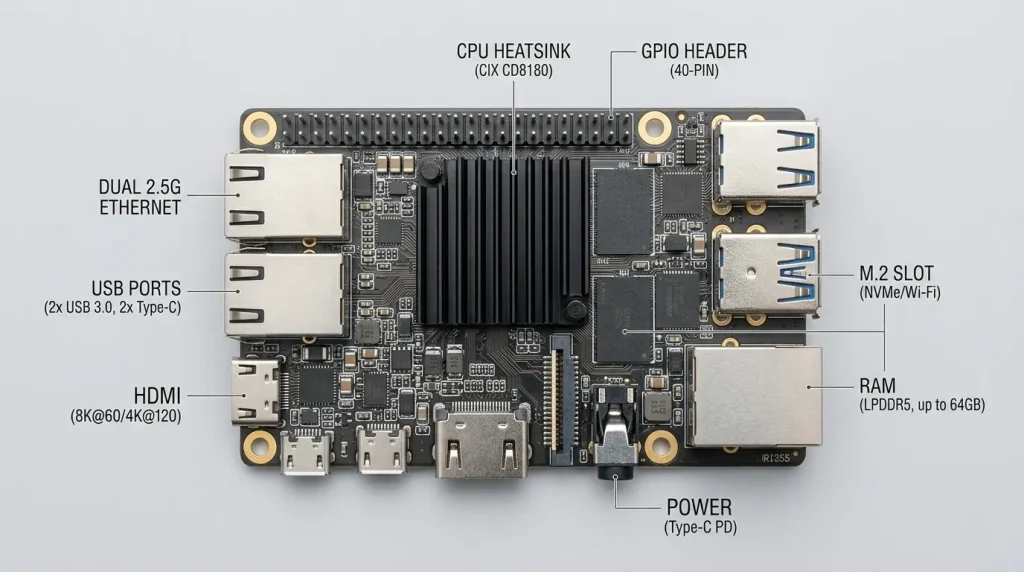
Orange Pi’s 2026 lineup is its most ambitious yet.
The Orange Pi AI Station, launched in January 2026, is a new single-board computer that can function as a mini PC, capable of running AI applications locally and connecting to external sensors and actuators.
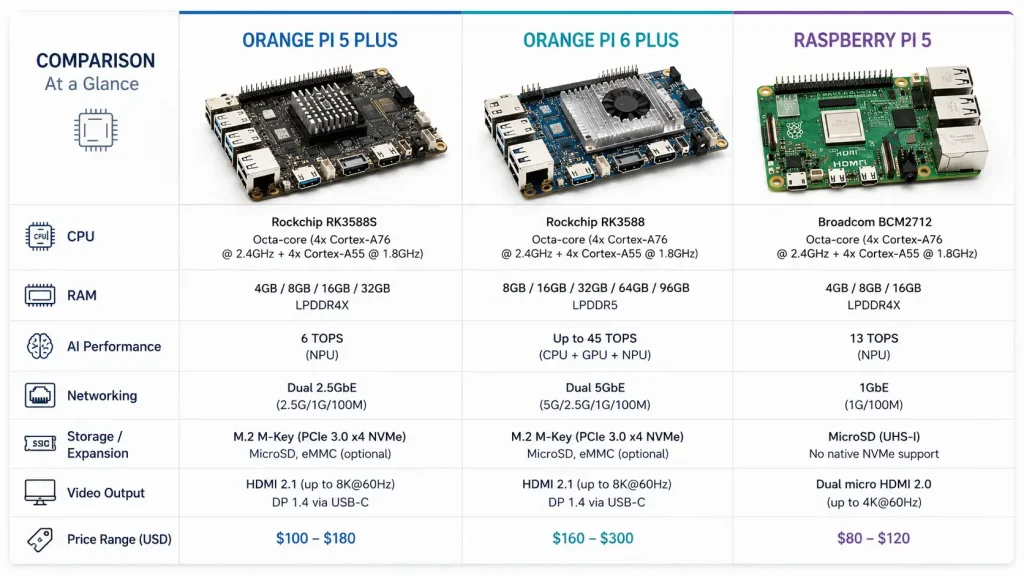
Then there’s the flagship, the Orange Pi 6 Plus, featuring a 12-core 64-bit ARMv9 processor with a total computing power of 45 TOPS across CPU, GPU, and NPU, available with up to 64GB of LPDDR5 RAM.
The Orange Pi 5 Plus, built around the Rockchip RK3588, remains the most balanced option in 2026, with native PCIe 3.0 x4 NVMe support delivering storage speeds up to 3,500 MB/s and dual 2.5 Gigabit Ethernet ports, making it exceptional for NAS builds and home server projects.
For the price, these specifications are genuinely hard to argue with.
The Part Nobody Warns You About
Here’s what most people don’t notice until after they’ve ordered: the hardware and the software are two very different stories.
Reviewers who tested the Orange Pi 6 Plus found that what began as a quick hardware look turned into deep dives into boot chains, vendor GPU blobs, and inference runtimes, because the software was wonky in exactly the wrong places.
A recurring criticism in the developer community is that Orange Pi appears uninterested in submitting patches for inclusion in the mainstream Linux kernel, meaning users must rely on vendor-specific repositories rather than trusted, upstream sources.
This might not seem like a big deal at first, but it is. It means more troubleshooting, less documentation, and a steeper learning curve than the specifications suggest.
“The hardware looks promising on paper. The software is wonky in exactly the wrong places.”
Who Is Orange Pi Actually For?
Not everyone hits these walls. It depends entirely on what you’re building and how comfortable you are with getting your hands dirty.
For most users, the Orange Pi 5 Plus offers the best combination of performance, connectivity, and value in 2026. Those needing more ARM performance and dual 5GbE as a hard requirement should consider the 6 Plus, keeping in mind its higher power draw and fan noise.
If you’re a developer who enjoys tinkering, Orange Pi rewards patience. If you want something that just works out of the box, it may frustrate you.
The Bigger Picture
Orange Pi is doing something important, even if imperfectly.
It’s pushing the price ceiling down for serious compute. Boards with 12 cores, dual high-speed Ethernet, and on-device AI used to cost thousands. Orange Pi ships them for under $300.
That matters for students in India building IoT projects, for developers in small studios prototyping edge AI, and for home lab enthusiasts who want real networking without real server bills.
“Affordable powerful hardware doesn’t just serve hobbyists. It lowers the entry point for the next generation of builders.”
The software gaps are real. But they’re also closable, and the community is slowly closing them.
Key Takeaways
- Orange Pi 6 Plus delivers 12 cores, 45 TOPS, and up to 64GB RAM, serious specs at an accessible price.
- The Orange Pi 5 Plus remains the most balanced, reliable choice for home servers and NAS builds in 2026.
- Software support lags behind the hardware vendor images, which often require significant setup and tinkering.
- The AI Station marks Orange Pi’s serious push into local, on-device AI workloads.
- Orange Pi is best suited for developers and experienced tinkerers, less ideal for plug-and-play users.
Conclusion
Every Orange Pi review eventually arrives at the same moment: the hardware impresses, the software resists, and you find yourself three hours deep into a forum thread, wondering if it was worth it.
For many people, it is. The raw capability per dollar is hard to match anywhere else in the SBC market right now.
But Orange Pi’s biggest challenge in 2026 isn’t the specifications. It’s trust. The developer community wants to know that the software will keep up, that the patches will reach upstream, and that the documentation will improve.
The hardware is already there. The question Orange Pi needs to answer next is simpler and harder:
Can a board this powerful become a board this reliable?
