


Most students today focus on learning how to build technology.
Very few are taught how to question it.
But in 2026, that’s exactly where new career opportunities are emerging.
Introduction
As AI, fintech, and digital platforms grow, so do the rules around them.
Companies are now expected to explain:
- How their systems work
- How data is used
- What risks exist
This is creating demand for professionals who understand both technology and compliance.
What Is a Career in Tech Compliance?
Tech compliance sits between engineering and regulation.
You’re not just building systems, you’re ensuring they follow rules and don’t create risk. If coding is about creating technology, compliance is about guiding and questioning it.
One builds the future, the other makes sure it’s safe, reliable and responsible.
Common roles include:
- AI Governance Specialist
- Compliance Analyst (Tech-focused)
- Cybersecurity Compliance Officer
- Data Privacy Specialist
These roles are growing across startups, fintech companies, and large tech firms.
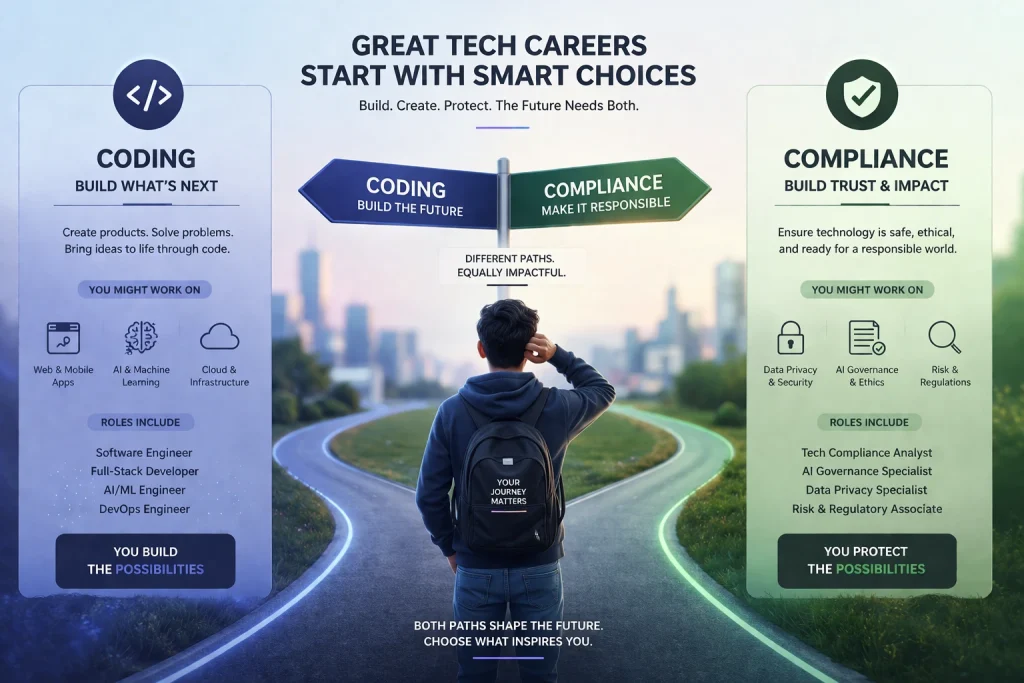
Source: AI-generated
Skills You Should Focus On
You don’t need to be an expert in everything.
Start simple. Build clarity.
Start with these areas:
1. Basics of Technology
- Understand how applications work
- Learn how data flows through systems
2. Awareness of Regulations
- Learn basic data privacy concepts
- Understand why regulations exist (not just what they say)
3. Risk Thinking
This is the most important skill.
Ask:
- What could go wrong?
- Where can systems fail?
4. Communication
You’ll often explain technical issues to non-technical teams.
Here, clarity matters more than complexity.
Why This Career Is Growing
Three simple reasons:
- More AI systems → more oversight needed
- More cyber threats → stricter rules
- More regulations → higher demand for compliance roles
This gap is growing, and companies are actively hiring for it.
“In the future, understanding risk will be just as valuable as writing code.”
Key Takeaways
- Tech compliance is a fast-growing career area.
- It combines technology, risk, and regulation.
- You need system understanding, not deep legal expertise
- Risk thinking is your biggest advantage
- Demand is increasing across industries
Conclusion
Not every tech career is about building faster systems.
Some are about making sure those systems don’t fail in ways that matter.
If you’re someone who likes to question, analyse, and understand systems deeply, this space is worth exploring.
Because the future of tech won’t just need builders.
It will need people who understand the consequences of what’s being built.
