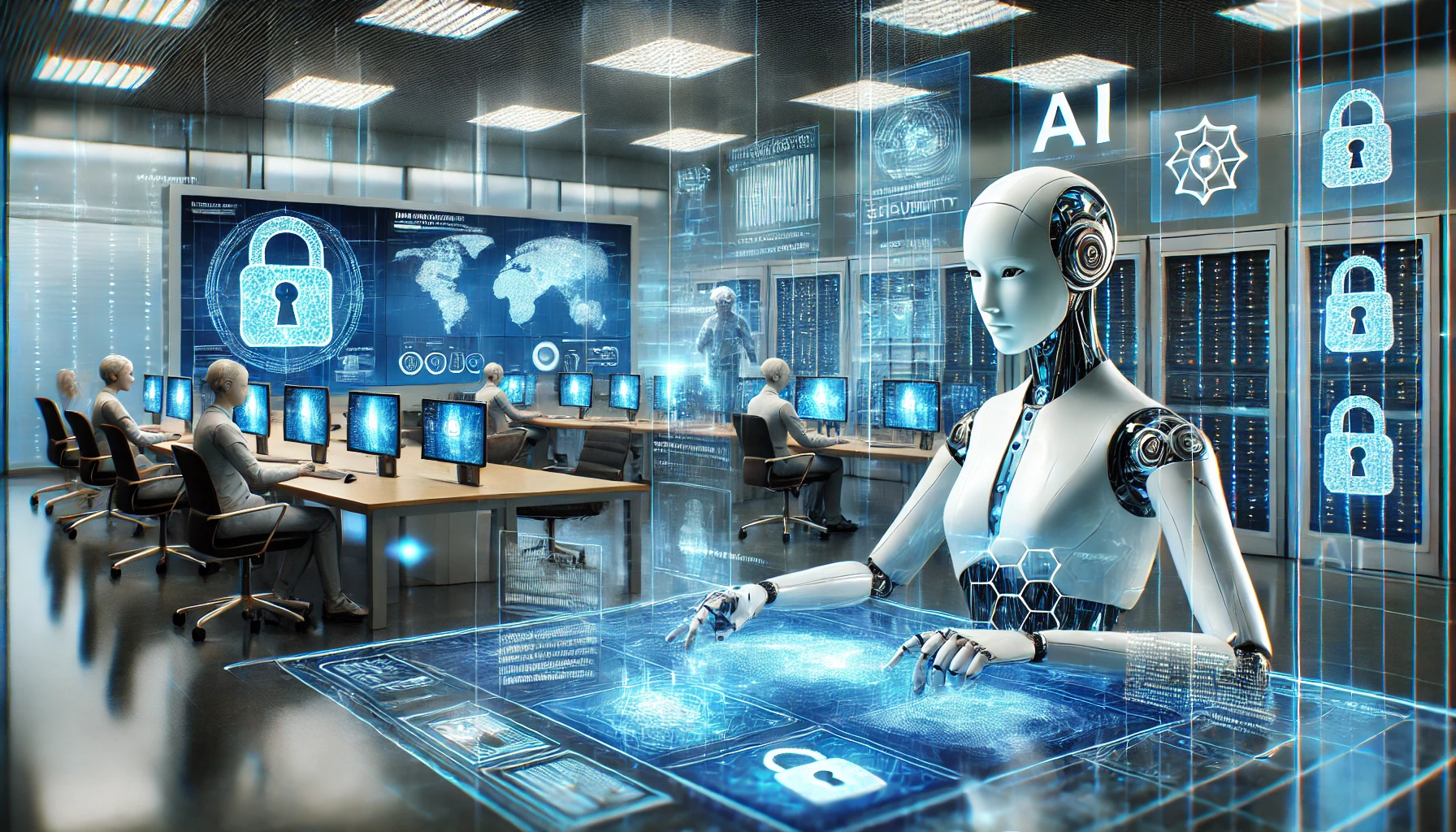

What if your SOC could think, investigate, and respond before an analyst even opens the alert?
AI Agents in Cybersecurity: From Alerts to Action
AI agents achieve this by:
- Performing intelligent alert triage, filtering out false positives and reducing noise at scale
- Correlating signals across endpoints, networks, identities, and cloud environments to uncover hidden attack patterns
- Automating incident investigation by reconstructing full attack timelines in real time
- Providing contextual insights, risk scores, and recommended actions for faster decision-making
This transforms the SOC workflow. Analysts no longer spend hours piecing together data; they receive decision-ready intelligence that highlights what happened, why it matters, and what to do next.
How AI Is Transforming SOC Performance
In modern cybersecurity, speed defines the outcome. The gap between detection and response is where most damage occurs. Attackers can escalate privileges, move laterally, and access sensitive data within minutes, often before traditional SOC workflows can react.
AI agents reduce two critical metrics:
- Mean Time to Detect (MTTD) – the time taken to identify a threat after it first appears.
- Mean Time to Respond (MTTR) – the time taken to investigate, contain, and resolve the threat.
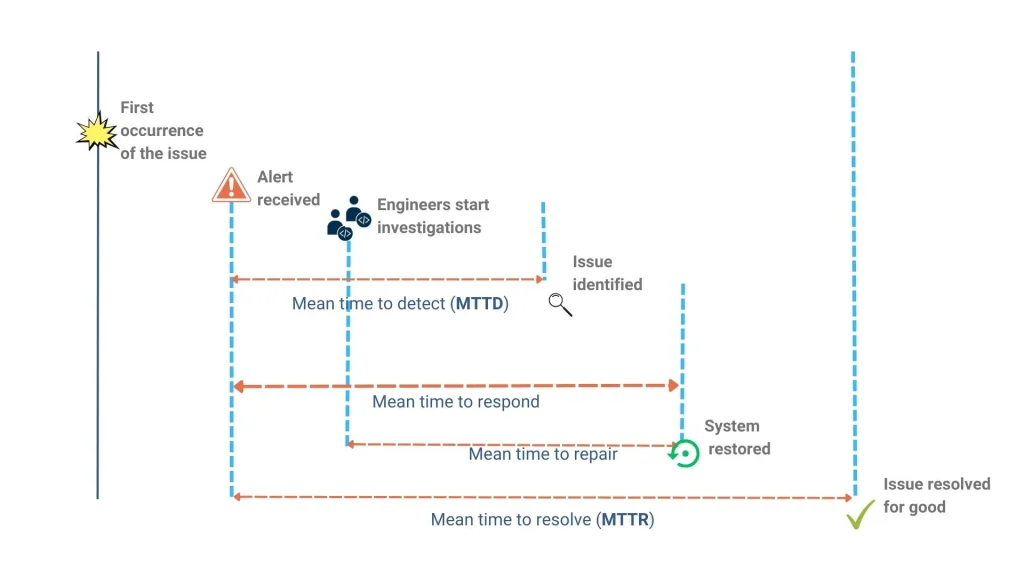
Figure 1: Incident response timeline showing MTTD and MTTR in cybersecurity operations.
Source: OpsVerse – “Measure MTTD and MTTR for Your Application”
Traditional vs AI-Driven SOC
Traditional SOCs rely on manual processes, which slow down detection and response. AI-driven SOCs use automation and real-time intelligence to operate faster and more efficiently.
| Aspect | Traditional SOC | AI-Driven SOC (2026) |
| Detection Speed (MTTD) | Slower, Manual | Real-time, AI-Powered |
| Response Speed (MTTR) | Delayed | Instant/ Automated |
| Alert Handling | High Noise | Prioritized alerts |
| Investigation | Manual | Automated Timelines |
| Correlation | Limited | Cross-System AI Correlation |
| Response | Analyst-Driven | Automated Actions |
Conclusion
AI agents are redefining security operations by addressing one of the most critical challenges in cybersecurity: the gap between detection and response. By reducing alert fatigue, automating investigations, and enabling real-time action, they allow SOC teams to operate with greater speed and precision.
In 2026, cybersecurity is no longer just about visibility; it’s about how quickly and intelligently you can respond.
As threats continue to evolve at machine speed, is your SOC equipped to keep up with an AI-driven future?
