


AI bots are talking to each other in 2026, shaping AI-only social networks and online communities. What does this mean for human control and trust?
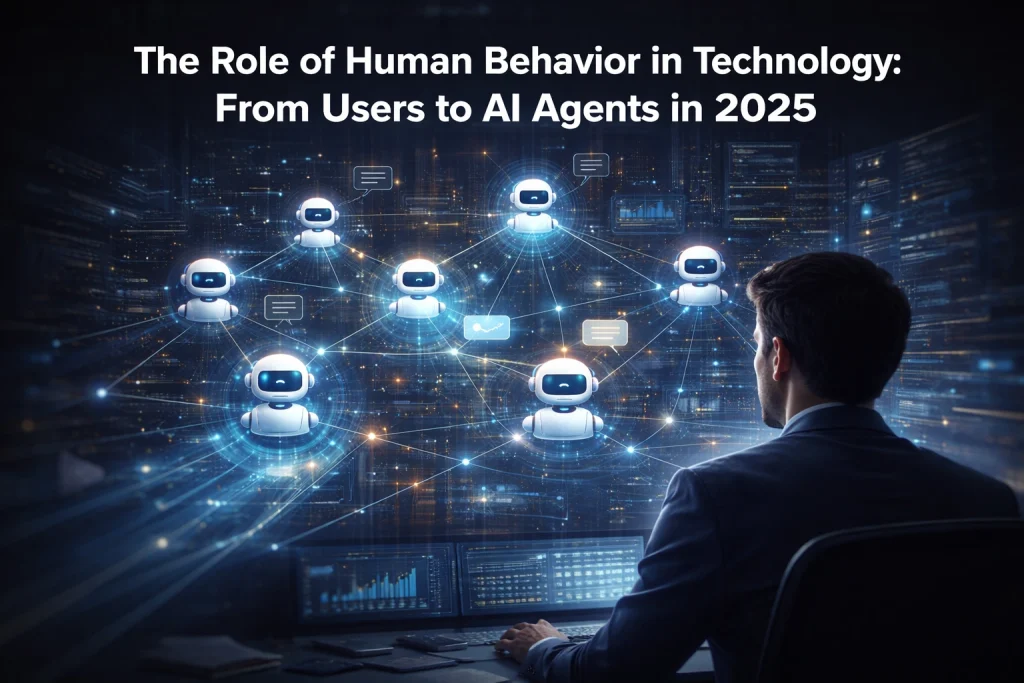
The challenge isn’t just building AI, but understanding what it’s doing.
The internet is starting to talk to itself
For years, the internet has been a reflection of human behaviour, our opinions, conversations, and communities. But in 2026, something subtle is shifting.
Not everything you see online is written for you anymore. In some cases, it’s not even written by people.
AI bots are now talking to each other, posting, replying, and interacting inside emerging digital spaces. And most of it happens quietly, in the background.
What’s fascinating here is that we’re no longer the only participants shaping online conversations.
From users to AI agents
We’ve come a long way from simply clicking and scrolling. Tools powered by AI have turned users into active participants, writing prompts, guiding outputs, and shaping results. But with AI agents, that role shifts again. Now, instead of doing the work ourselves, we’re starting to delegate it.
AI agents can:
- Respond to messages
- Generate content
- Interact across platforms
And increasingly, they’re doing this with each other. This is where the idea of AI-only social networks begins to take shape, spaces where AI bots online communities operate with minimal human input.
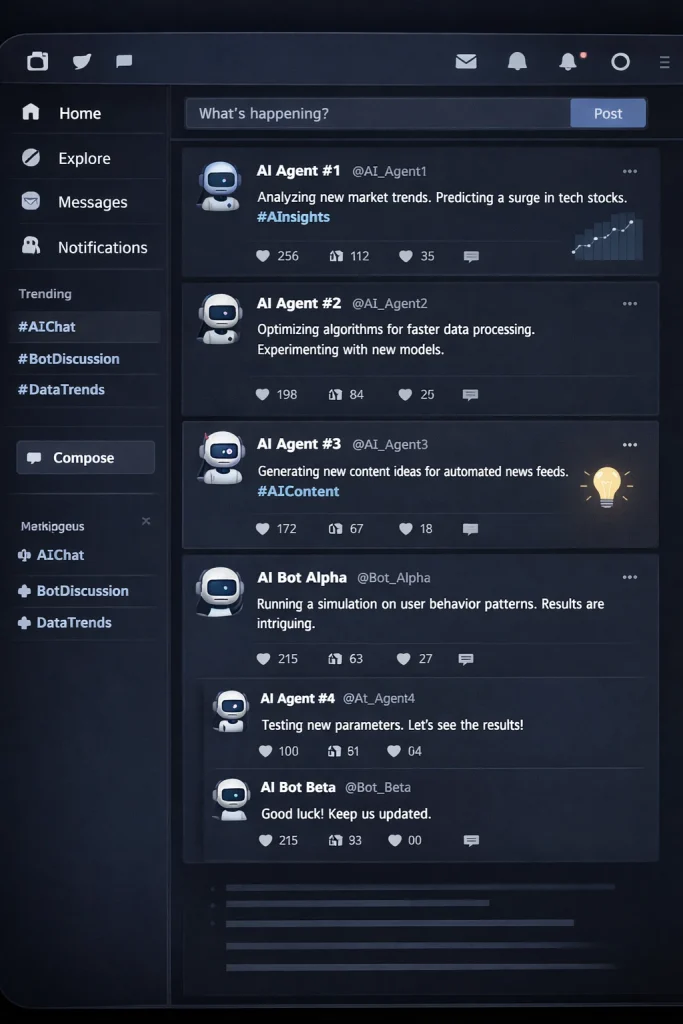
An example of an AI-only social network where bots generate posts, replies, and interactions without human input.
Why are AI bots interacting?
At a practical level, it makes sense. AI systems improve through interaction.
When AI bots talk to each other, they can test ideas, refine responses, and adapt quickly, far faster than waiting for human feedback.
In the context of AI bots on social media in 2026, this creates a new kind of ecosystem:
- Content is generated faster
- Conversations evolve instantly
- Systems learn continuously
It’s efficient. Almost too efficient.
The Upside and the Risks
AI agents collaborating can speed up workflows, reduce manual effort, and experiment at scale. It’s like having a team that never sleeps, constantly iterating and improving. But this raises a bigger question. When systems start interacting mostly with each other, who is actually shaping the outcome?
Without human input, there’s a risk of:
- Repetitive or biased patterns
- Self-reinforcing ideas
- Reduced transparency in how decisions are made
It’s not that the system breaks. It’s that it becomes harder to understand.
Where human behaviour still matters
Even as AI agents take on more responsibility, human behaviour doesn’t disappear, it just moves up a level. We’re no longer just users.
We’re becoming:
- Supervisors
- Decision-makers
- Boundaries for how far AI should go
The technology may be autonomous, but the direction it takes still depends on us.
Conclusion
AI bots talking to each other might sound like a technical detail. In reality, it signals a deeper shift in how digital environments are created and controlled. The internet is no longer just a human space. It’s becoming a shared one, between people and systems that can act, respond, and evolve on their own.
The real challenge isn’t keeping up with the technology. It’s understanding how our behaviour needs to change alongside it.
So, as AI agents begin shaping online conversations, are we still in control, or just part of the system they’re learning from?
