
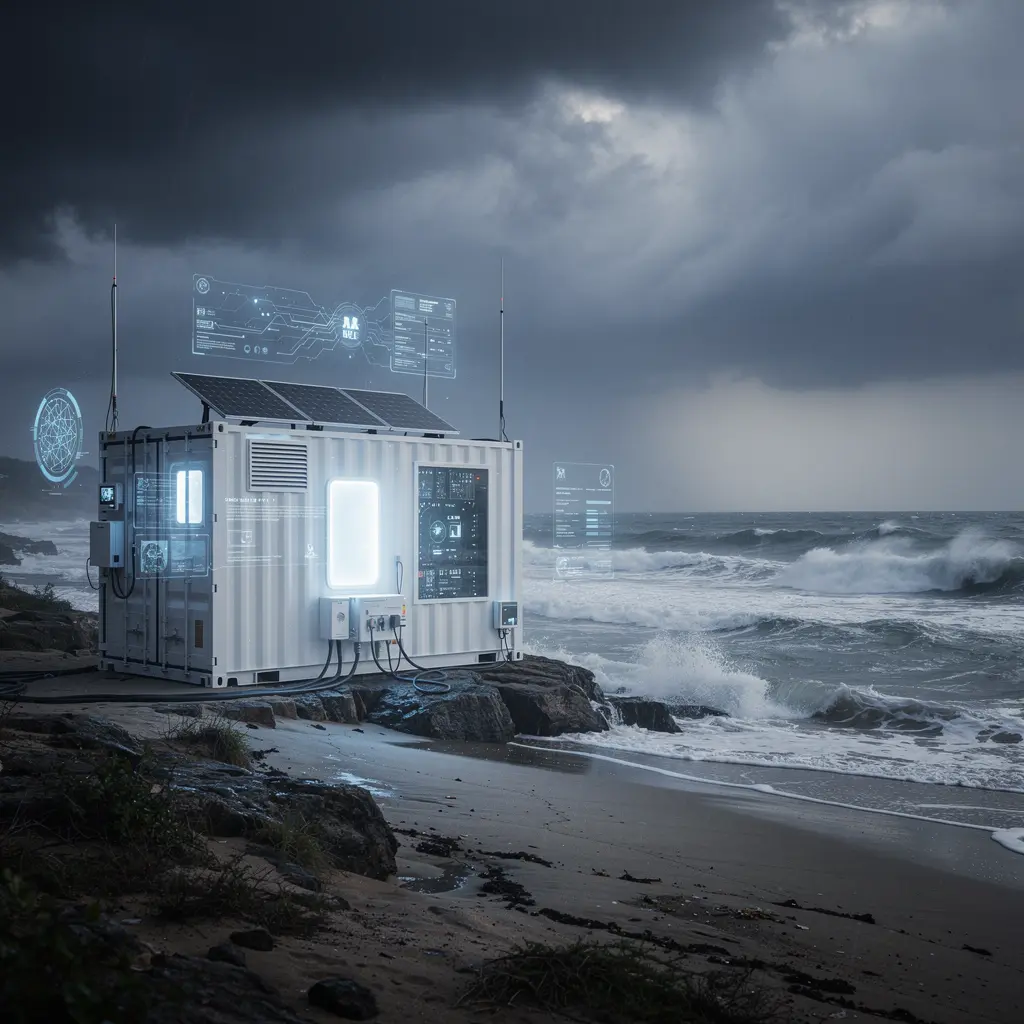

When a flood hits, the first thing that breaks, before the roads, before the relief camps, is the internet.
And here’s the uncomfortable truth:
Most of our AI systems are completely useless at that exact moment.
Introduction
Yet the tools designed to help, AI models, real-time data systems, and early warning platforms, all run on one assumption: that the internet will be there when you need it.
NITK Surathkal just challenged that assumption.
On April 11, 2026, the National Institute of Technology Karnataka launched NOMAD — Node for Open-source Mobile AI Deployment, a fully operational AI research platform that works exactly where connectivity doesn’t.
This might not seem like a big deal at first. But it is.
What Is NOMAD, Really?
Think of it this way: while every other AI system is waiting for a Wi-Fi signal,
NOMAD already has the answer.
The platform runs AI workloads entirely on-site, at the “edge”, meaning computation happens locally, right where the data is being generated.
No cloud. No latency. No dependency on infrastructure that disasters routinely destroy.
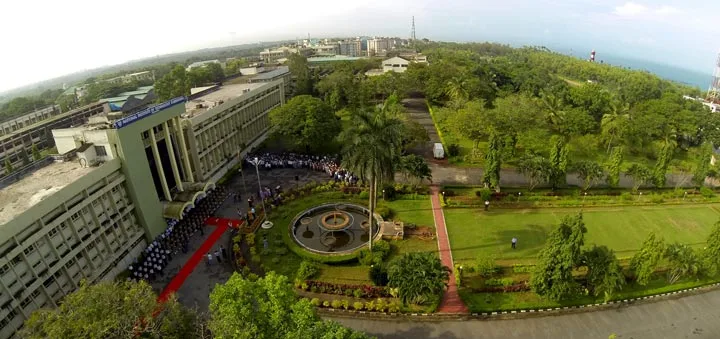
Source: NITK Surathkal Official Gallery (old.nitk.ac.in)
Built to Survive What Other Systems Can’t
Here’s what most people don’t notice about disaster zones: it’s not just one thing that fails. Everything fails together.
NITK engineers clearly understood this.
NOMAD was designed with four independent power sources:
- Rooftop solar installations
- Grid supply (when available)
- A towable 15 kW solar-battery unit
- A diesel generator backed by UPS
Cut one. Another takes over. The system doesn’t blink.
Inside, NOMAD runs on open-source computing clusters, edge devices, and high-capacity storage, with plans to integrate NITK’s institutional High-Performance Computing (HPC) resources for even greater capabilities.
It’s not just a lab setup.
The SEARCH station includes living quarters, enabling researchers to stay on-site and work continuously, directly engaging with shifting environmental conditions in real time.
The Problem It’s Actually Solving
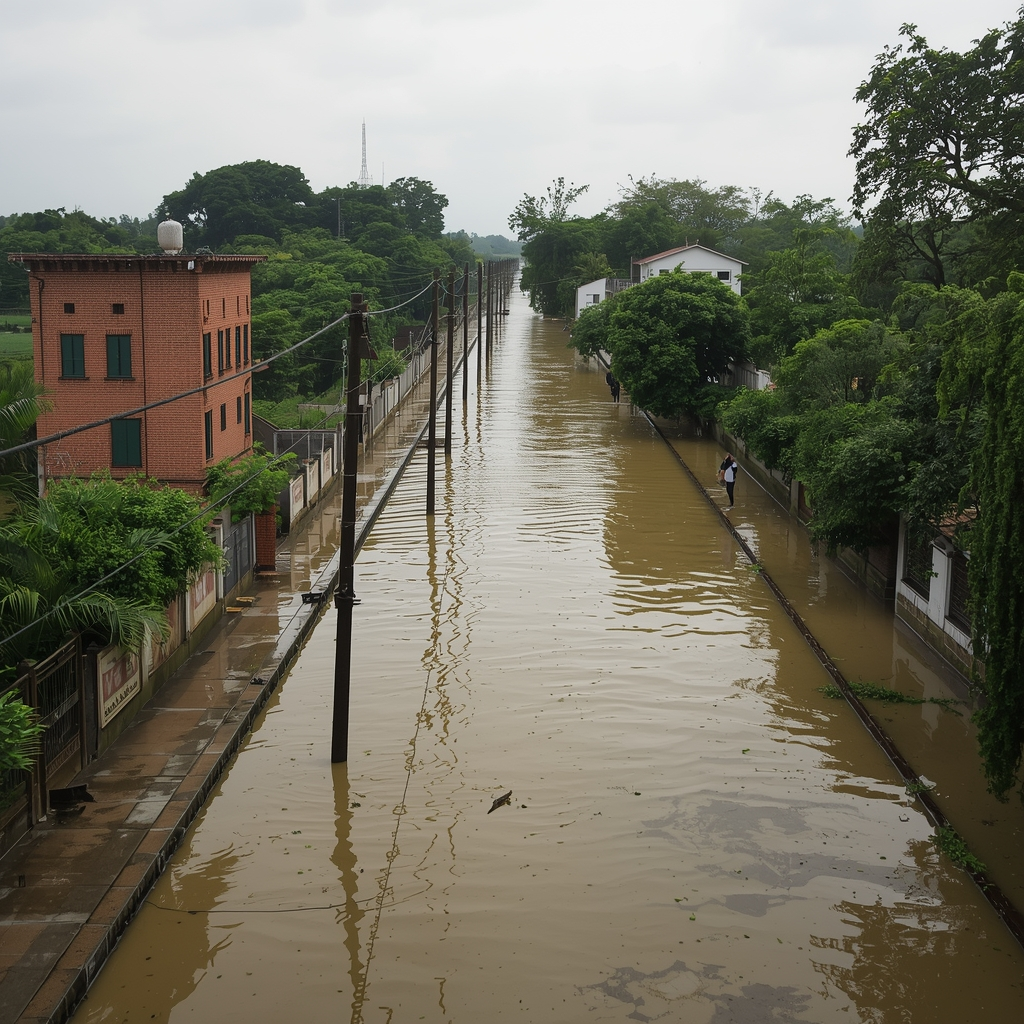
Source: AI-Generated
During a landslide in the Western Ghats or flash flooding along the Karnataka coast, local authorities need data-driven decisions immediately.
Not after the network comes back. Not after the backup generator kicks in somewhere 200 km away.
NOMAD’s focus areas tell this story clearly:
- Edge AI architecture: running intelligent models locally without cloud dependency.
- AI-driven water systems: monitoring and managing water behaviour in real time.
- Coastal disaster intelligence: processing environmental data during floods and landslides, when traditional connectivity is gone.
When connectivity is the first casualty, local intelligence becomes the last line of defence.
The People Behind It
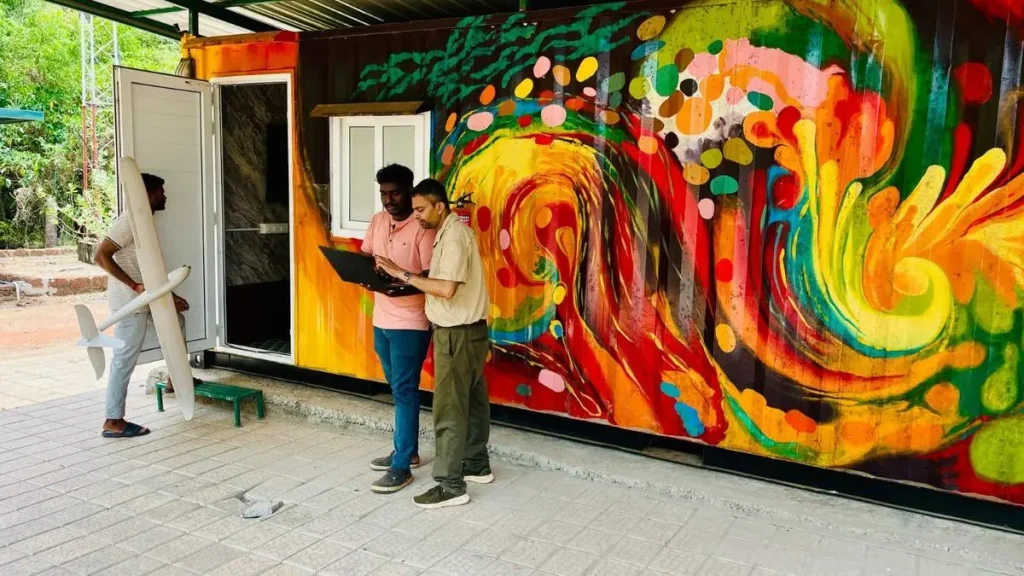
Source: The Hindu (thehindu.com) – feature article on NITK Surathkal’s NOMAD AI platform launch.
Mentoring the initiative is Padmanand Warrier, a 1981 NITK alumnus (Electrical and Electronics Engineering) with decades of experience in large-scale technology systems.
His words are worth pausing on:
“During coastal disasters, infrastructure is often the first to collapse. Platforms like NOMAD ensure that advanced AI systems continue to function, enabling timely and critical decision-making on the ground.”
This isn’t academic optimism.
It’s a design principle baked into every layer of the platform.
Insight Layer: Why This Matters More Than It Looks
Billion-user platforms, smart cities, and digital governance all of it runs on the assumption of connectivity.
NOMAD asks a different question: what happens when that assumption breaks?
Edge AI isn’t new as a concept. But deploying a full, self-powered, open-source edge AI research station on a live disaster-prone coastline is a different kind of statement. It’s not theoretical resilience. It’s operational resilience, tested by geography.
And the fact that it lives in a shipping container? That’s not a budget compromise.
That’s the point. Modular, moveable, deployable.
NOMAD could, in principle, go where the disaster is.
Key Takeaways
- NOMAD = Node for Open-source Mobile AI Deployment, launched April 11, 2026, at NITK Surathkal.
- Operates from a repurposed shipping container at the SEARCH research station on the Arabian Sea.
- Four independent power sources ensure zero downtime during disasters.
- Focuses on edge AI for coastal disaster intelligence, water systems, and offline field computing.
- Led by Dr. Pruthviraj U, mentored by NITK alumnus Padmanand Warrier.
- Plans to expand through interdisciplinary collaborations and HPC integration.
Conclusion
NOMAD was built for the opposite. For the moment, the grid goes dark, the signal disappears, and someone on the ground needs an answer that could save lives.
It’s a small container on a beach.
But what it represents is worth thinking about:
What if resilience, not intelligence, is the next real frontier of AI?
