
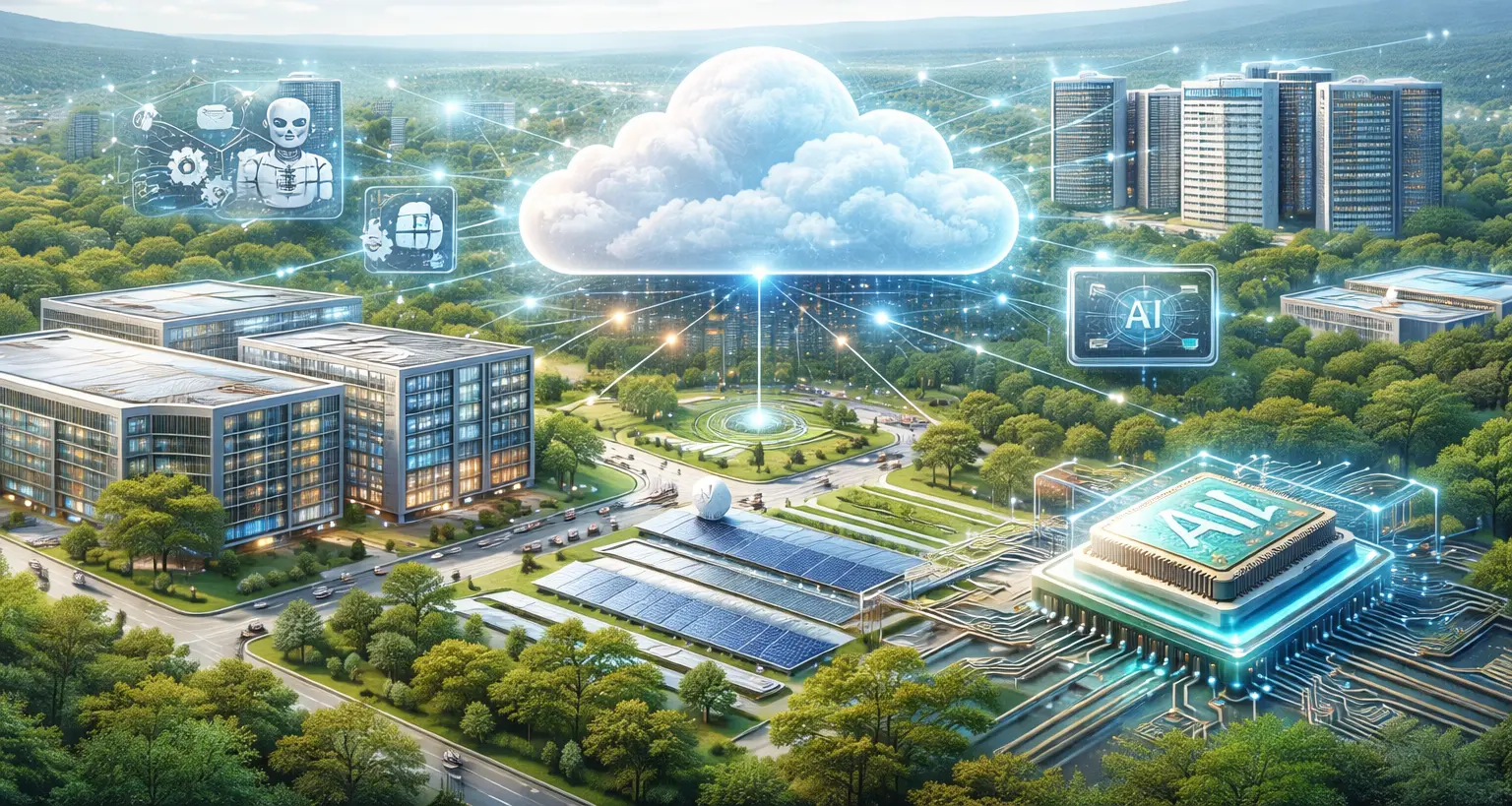

The cloud is no longer invisible
For years, cloud computing quietly powered the digital world. It stored data, ran applications, and kept systems operational, but rarely took centre stage.
That is no longer the case.
What is fascinating here is that cloud computing has moved from being a support layer to becoming the foundation of modern technology.
As artificial intelligence continues to scale, the pressure on cloud infrastructure is reshaping how systems are built, deployed, and managed. The real story is no longer just about software. It is about the systems that make that software possible.
Rethinking what cloud actually means
At its core, cloud computing still provides on-demand access to computing resources. But in practice, that definition feels increasingly incomplete.
Platforms like Amazon Web Services, Microsoft Azure, and Google Cloud have evolved into global infrastructure layers that power everything from enterprise systems to large-scale AI workloads.
Today, these platforms are expected to handle continuous high-volume workloads, support distributed computing at scale, and deliver low-latency performance across regions.
What has changed is not just scale, but responsibility.
AI is forcing the cloud to evolve
Artificial intelligence has fundamentally changed what cloud infrastructure needs to do.
Training and running modern AI systems require enormous compute power, specialised hardware, and highly optimised data pipelines. This shift is reflected in large-scale collaborations among companies such as Anthropic, Google, and Broadcom.
These partnerships focus on securing long-term access to computing capacity using custom-built chips and dedicated infrastructure that is often planned years.
This raises a bigger question.
Is the future of innovation now tied more closely to infrastructure than to algorithms?
The quiet rise of the compute race
Behind the scenes, a new kind of competition is unfolding.
Cloud providers are no longer just competing on features or pricing. They are competing on compute capacity, infrastructure efficiency, and the speed at which they can expand.
This has led to what many describe as a computer race.
At this level, performance is no longer just about software. It is about physical capability. It depends on how fast data can move, how efficiently systems can scale, and how reliably power can be delivered. These factors are quickly becoming the real differentiators.
Moving beyond traditional hardware
For years, GPUs, especially from NVIDIA, powered most AI workloads. But that dependency is beginning to shift.
Cloud providers are investing in custom AI chips, application-specific processors, and tightly integrated hardware and software ecosystems.
Google’s TPUs are one example, designed specifically for AI workloads rather than general-purpose computing.
What is interesting here is that this shift is not just about performance.
It is about control, efficiency, and long-term scalability.
Data centers are becoming industrial systems
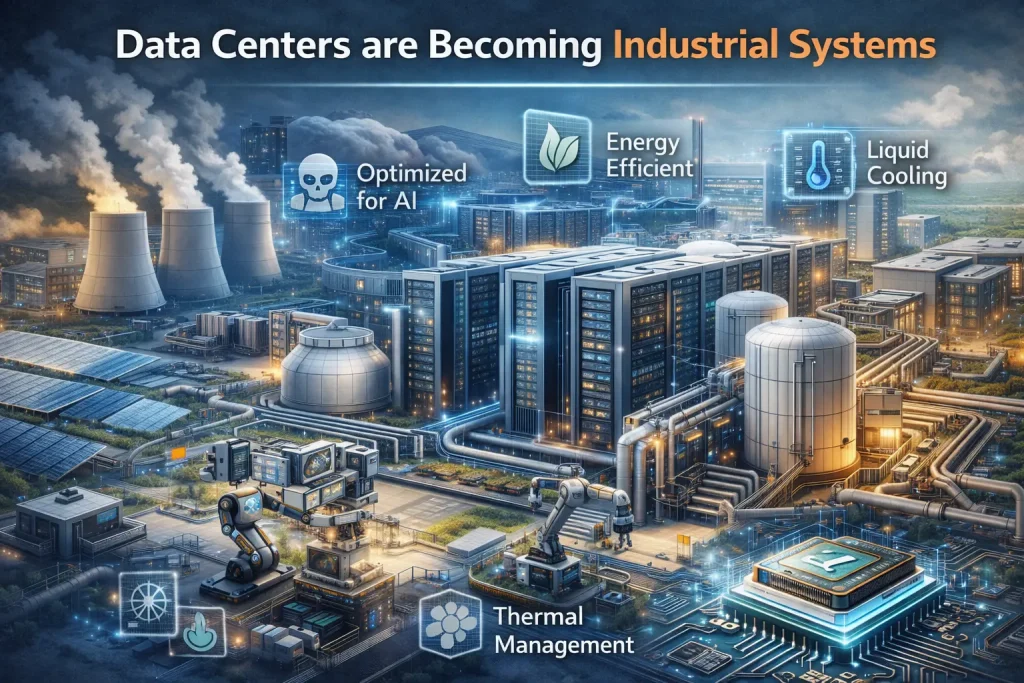
If cloud computing is the backbone, data centres are its physical core, and they are evolving rapidly.
Modern data centres are no longer just server facilities. They are highly specialised environments optimised for AI workloads and designed around energy efficiency and thermal management.
Even Amazon is exploring advanced concepts like Project Houdini to rethink how data centres can scale and operate more efficiently.
What is fascinating here is that cloud computing is beginning to resemble a large-scale industrial system where infrastructure design is just as important as software innovation.
Where the cloud is heading next
The direction of cloud computing is becoming clearer, and it goes far beyond incremental improvements.
AI native infrastructure will allow cloud systems to automate operations, optimise performance, allocate resources, and predict failures in real time.
Specialised computing environments will continue to grow, with infrastructure designed specifically for AI and high-performance workloads.
Multi-cloud strategies will become more common as organisations look for flexibility, resilience, and cost efficiency. Intelligent monitoring systems will play a critical role as complexity increases, helping maintain stability at scale.
A simple way to understand the shift
A decade ago, cloud computing functioned like electricity, something you accessed when needed.
Today, it feels closer to a dynamic system, one that not only powers applications but also shapes how they are built, scaled, and delivered.
Conclusion
What is easy to overlook is where the real transformation is happening.
It is not just in applications or AI models. It is happening beneath the surface, in the infrastructure that enables everything else.
From large-scale partnerships to custom chip development and next-generation data centres, cloud computing is becoming the deciding factor in how far and how fast technology can evolve.
As demand for computing continues to grow, one thing becomes clear. The future of innovation will depend not just on ideas, but on the systems powerful enough to support them.
So, as cloud infrastructure becomes more complex and critical, how prepared are we to scale it sustainably and responsibly?
