
You’re hiking deep in the mountains.
No signal. No Wi-Fi. Your phone is useless.
But your wrist buzzes, a message from your partner, three ridges away.
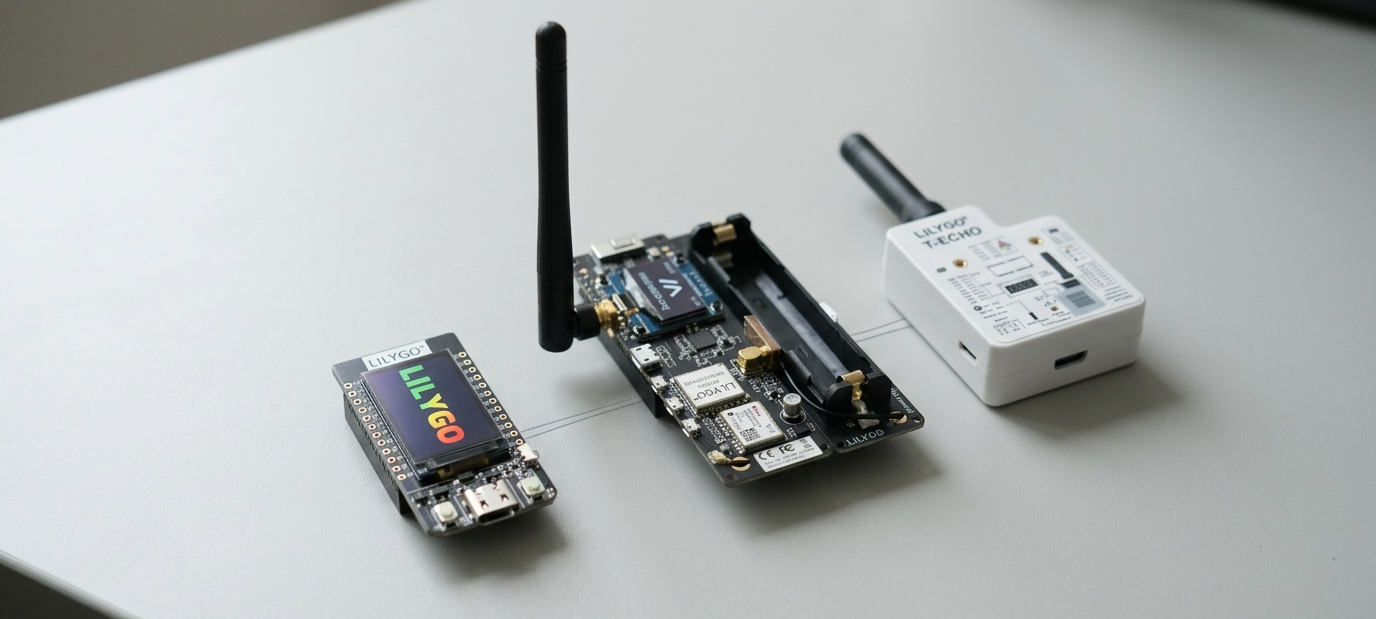
No tower made that happen. A LILYGO board did.
What Is LILYGO?
LILYGO is a brand of electronic modules and development boards, founded in 2018, focused on IoT, DIY, and education, based in Shenzhen, China. Their boards are built around Espressif’s ESP32 chip family, a dual-core, Wi-Fi and Bluetooth-enabled microcontroller that’s become the foundation of modern IoT development.
But where most manufacturers stop at the chip, LILYGO keeps going.
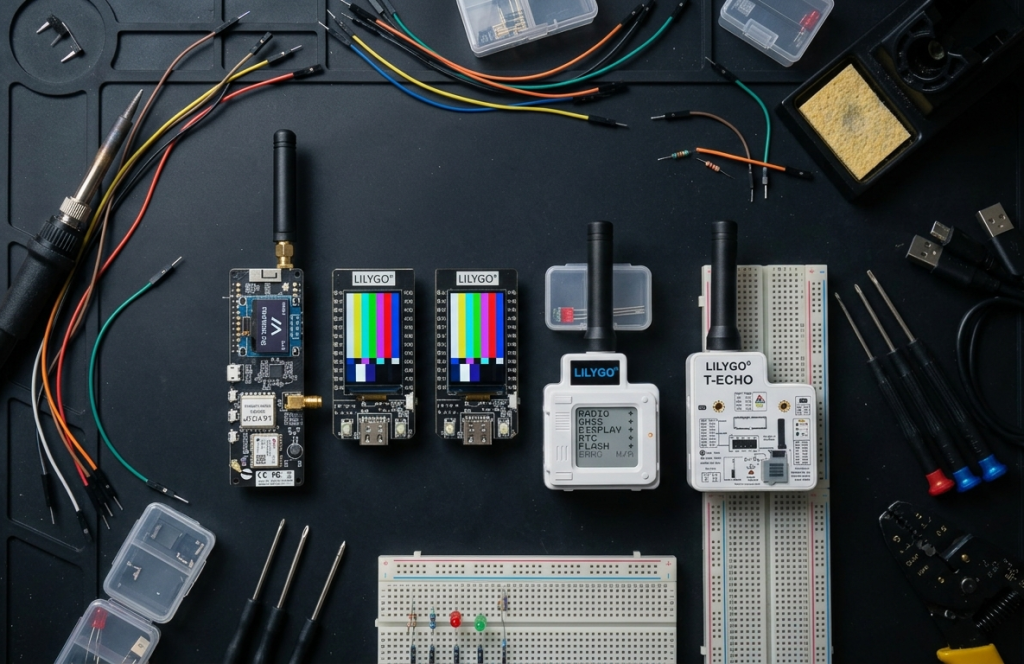
What sets LILYGO apart from generic ESP32 modules is their integration of additional components: OLEDs, e-paper displays, LiPo battery management, LoRa transceivers, and camera interfaces, all in compact, ready-to-use form factors. Instead of sourcing and wiring six separate components, you start building the moment the board arrives.
“A generic microcontroller is a blank canvas. A LILYGO board is a canvas with the frame built, the brushes laid out, and the palette mixed.”
Their products are widely used in smart homes, industrial monitoring, wearables, environmental sensing, and low-power long-range communication. Boards support Arduino IDE, ESP-IDF, PlatformIO, and MicroPython, accessible for beginners, efficient for professionals.
From TTGO to a Global Maker Brand
LILYGO grew without a marketing budget. GitHub repositories, YouTube builds, and Reddit threads did the work. Early products shipped under the TTGO label, a name that still appears on many popular boards today.
The brand has strict control from R&D to production, respects individuality, and provides entry-level sample code for most products to help learners get up and running faster.
Over time, the lineup expanded into clear series: LoRa + GPS (T-Beam), e-Paper displays (T5), screen-equipped modules (T-Display), cellular boards (T-SIM), and wearables (T-Watch). Products now ship from warehouses in the US, Germany, and Canada, and LILYGO has shown up at Maker Faire events in Rome, Tokyo, and Hannover, meeting their community where it actually lives.
What’s New in 2026
T-Watch Ultra: The Off-Grid Smartwatch
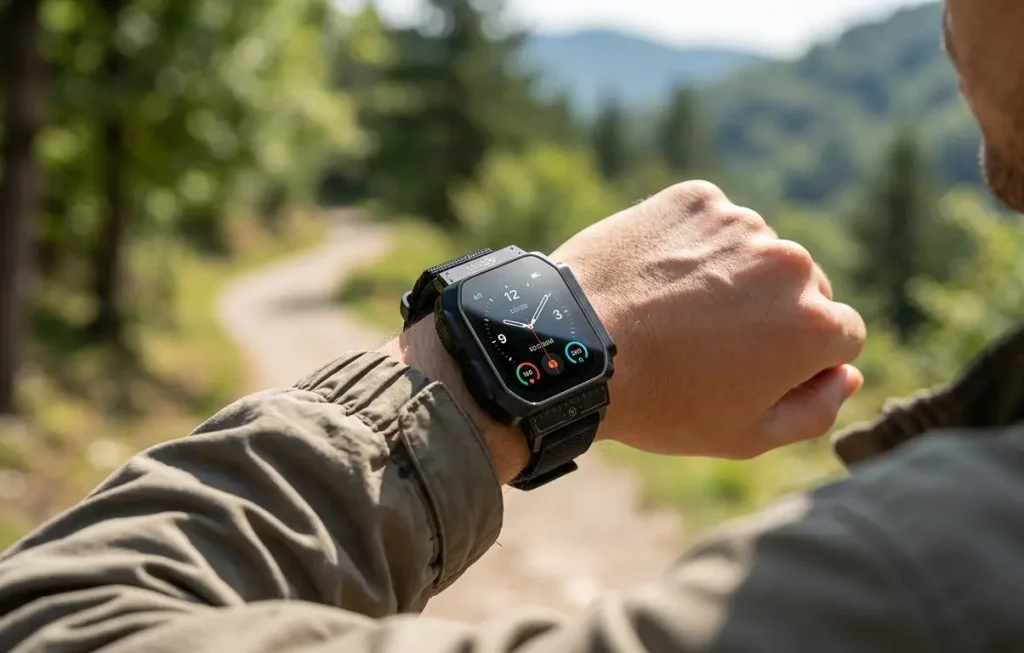
The T-Watch Ultra is an ESP32-S3-based smartwatch with a 2.01-inch AMOLED touch display, a 1,100mAh battery, an IP65 waterproof rating, a u-blox GNSS module, an SX1262 LoRa transceiver, a Bosch BHI260AP smart AI sensor, NFC, a built-in microphone, a haptic driver, and a microSD card slot.
The LoRa radio means this watch communicates over kilometres without any network. Starting at $78, it’s a genuine platform for off-grid wearable development, not a toy.
LILYGO Spark: Firmware Without the Friction
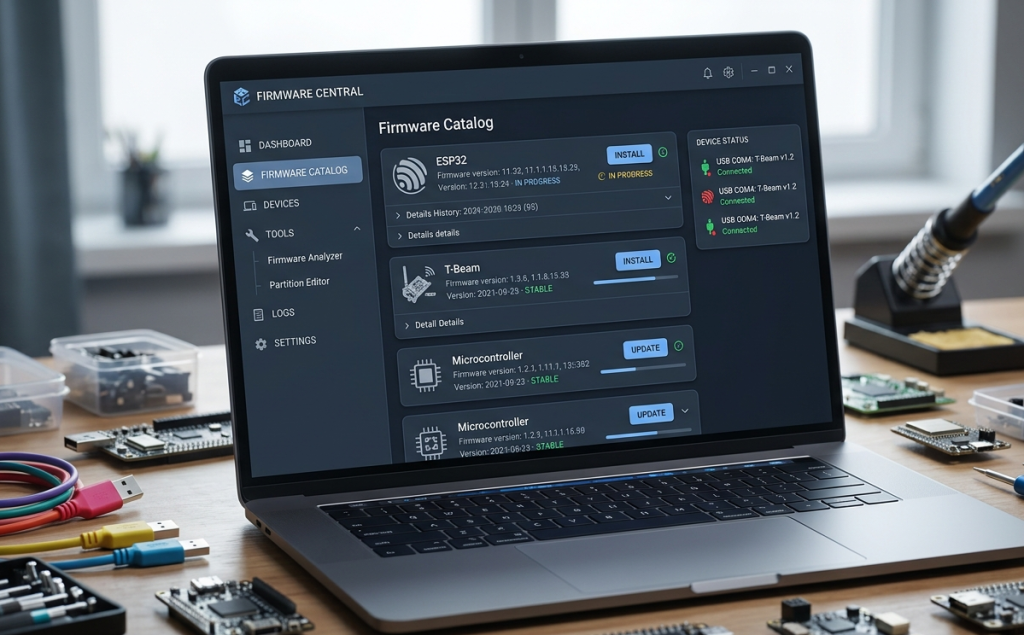
Spark is a cross-platform firmware hub and flash tool for LILYGO and other ESP devices, built with Electron, React, and TypeScript.It lets you browse the complete LILYGO firmware catalog, see firmware details and version history, and flash with one click — with community uploads and factory firmware all in one unified interface. It also includes a firmware analyzer, partition table editor, and a full electronics toolbox.For anyone who’s spent hours troubleshooting command-line flash tools, Spark is a genuine relief. Currently in beta, open-source under MIT license.
“Spark is the kind of tool that makes you wonder why it didn’t exist sooner.”
T-Echo Plus : Rugged Off-Grid Communicator
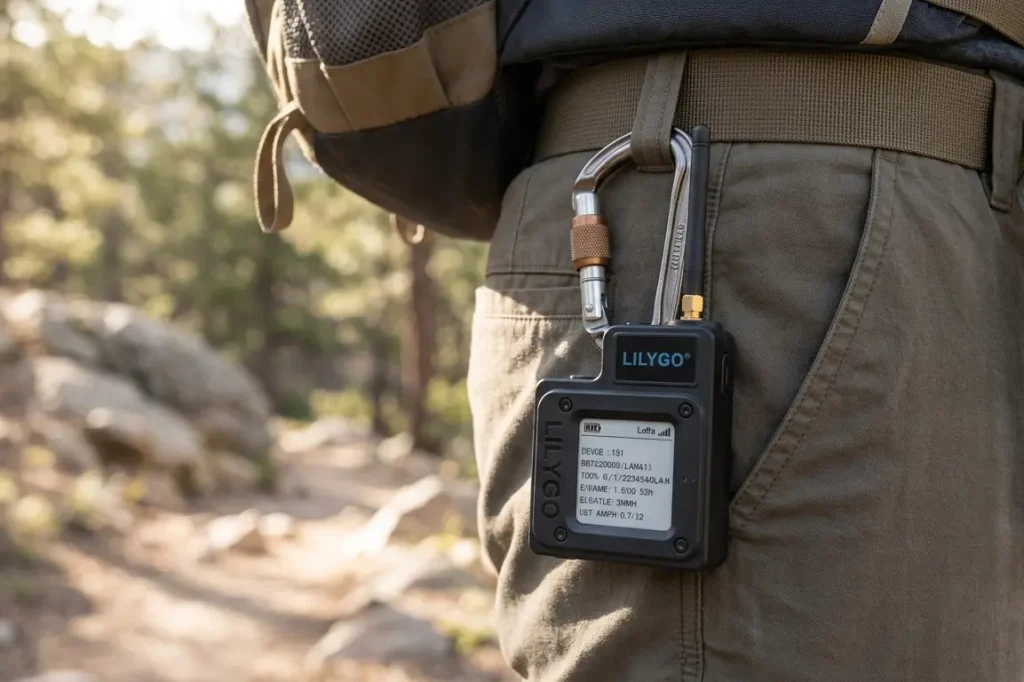
It’s built for hikers, cyclists, and anyone who needs reliable communication when the grid disappears. Priced from $64.
Where LILYGO Is Heading
Three clear directions define 2026 and beyond.
Edge AI, the BHI260AP self-learning motion sensor, now appears across multiple products. Inference is happening on the device, in the field, without a cloud call.
Off-grid connectivity, LoRa and Meshtastic compatibility aren’t side features anymore. They’re central to LILYGO’s identity.
Developer experience, Spark proves LILYGO is thinking beyond hardware. They want the full build cycle to feel smooth. Most IoT hardware companies sell you a component.
LILYGO is building a platform, one board, one tool, one community contribution at a time. The code is public. The hardware is open. The philosophy is simple: make it easy for anyone to build something real.
In a world full of locked-down technology, that’s a quietly radical idea. And it raises an honest question:
What will the next generation of makers build with tools like these?
