

Most conversations about AI start with data centres, billion-dollar investments, and servers you’ll never see.
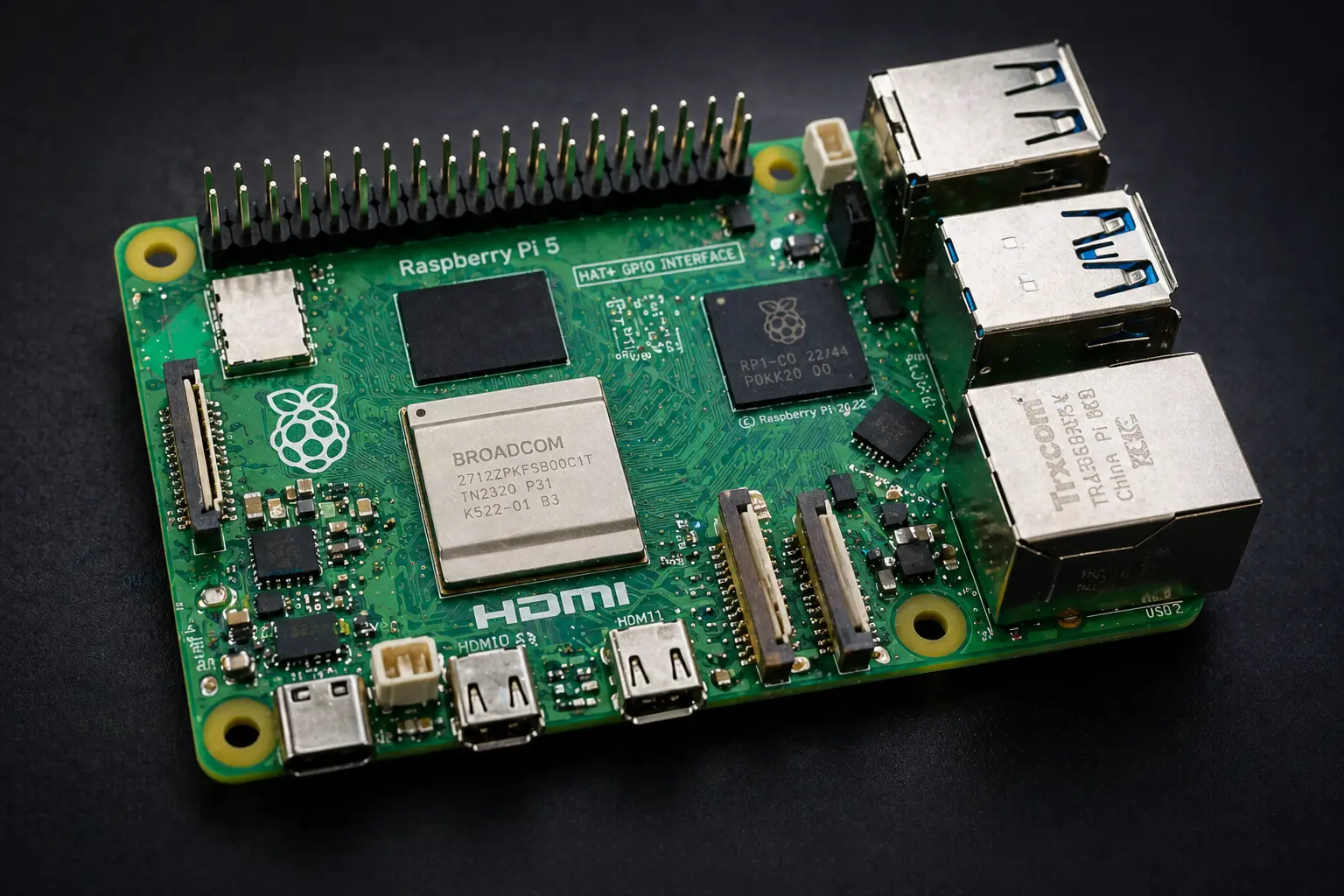
This one starts with a computer the size of a credit card, one that costs less than a textbook and is quietly running real artificial intelligence in homes, farms, hospitals, and classrooms right now.
If you’ve heard of Raspberry Pi but never connected it to AI, that gap is worth closing.
Introduction
Raspberry Pi was built for students. Small, affordable, and simple enough for a beginner to understand, it was never meant to be a serious computing platform. It was a teaching tool.
But something happened along the way.
The hardware got more powerful. AI models got smaller and more efficient. And suddenly, the gap between “learning computer” and “real AI platform” closed faster than anyone expected.
Today, Raspberry Pi is one of the most widely used devices for implementing AI outside of cloud systems, running intelligence locally, privately, and without the cost or complexity that most people assume AI requires.
How It Works
To understand how Raspberry Pi runs AI, it helps to understand that there are two kinds of AI in the world right now.
The first lives in the cloud. You send a request, it travels to a powerful server, gets processed, and an answer comes back.
This is how most AI tools work: ChatGPT, Google Assistant, and image generators. They’re powerful because they have enormous resources behind them.
The second kind lives on the device itself. No internet. No server. The intelligence runs right there, on the hardware in your hand. This is called Edge AI, and it’s exactly where Raspberry Pi comes in.
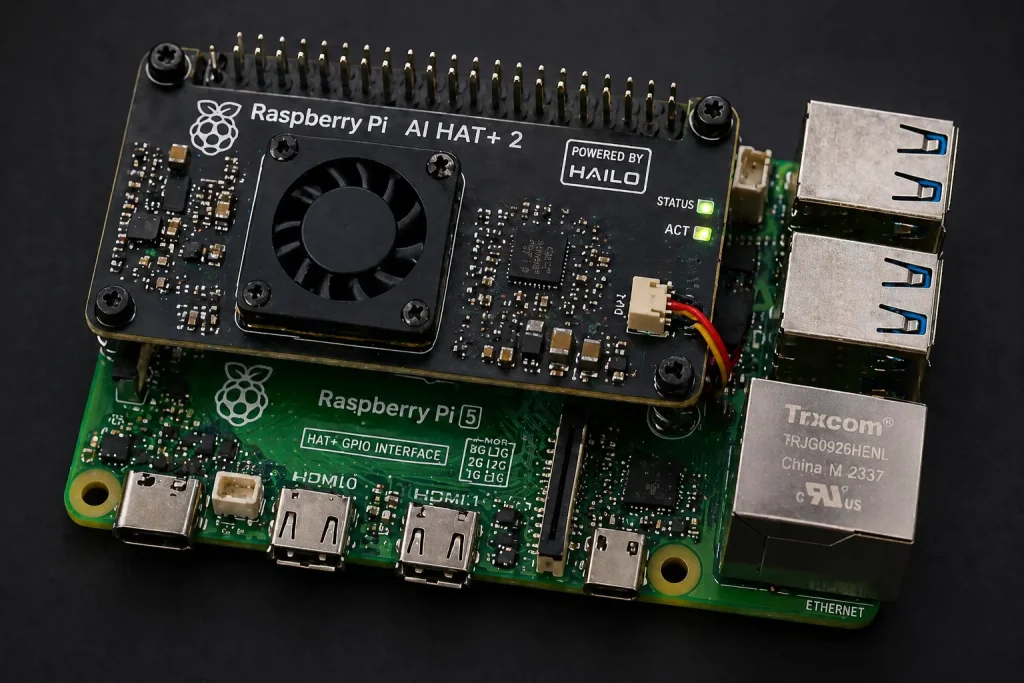
The Raspberry Pi 5, paired with the new AI HAT+ 2 released in early 2026, is now a genuinely capable edge AI platform. The HAT+ 2 contains the Hailo-10H neural network accelerator, a chip built specifically to run AI models at low power and high efficiency.
In India, a complete setup costs between ₹14,000 and ₹17,500. That’s a capable AI system for less than most entry-level laptops. But hardware is only half the story. AI models themselves have gotten significantly leaner. A new generation of small, optimised models can now perform language understanding, object recognition, and speech processing without needing a powerful GPU. These aren’t dumbed-down versions of AI. Think of them as specialists rather than generalists. A model built to detect whether a plant is healthy doesn’t need to know everything; it just needs to know that one thing, exceptionally well.
That focus is what makes edge AI not just possible on a Raspberry Pi, but genuinely practical.
Where It’s Used
Smart cameras that detect unusual movement and recognise faces, all processed locally; no footage is sent to any server anywhere.
Offline voice assistants that respond to commands even when the Wi-Fi goes down are essential for rural areas, industrial facilities, and anywhere connectivity is unreliable.
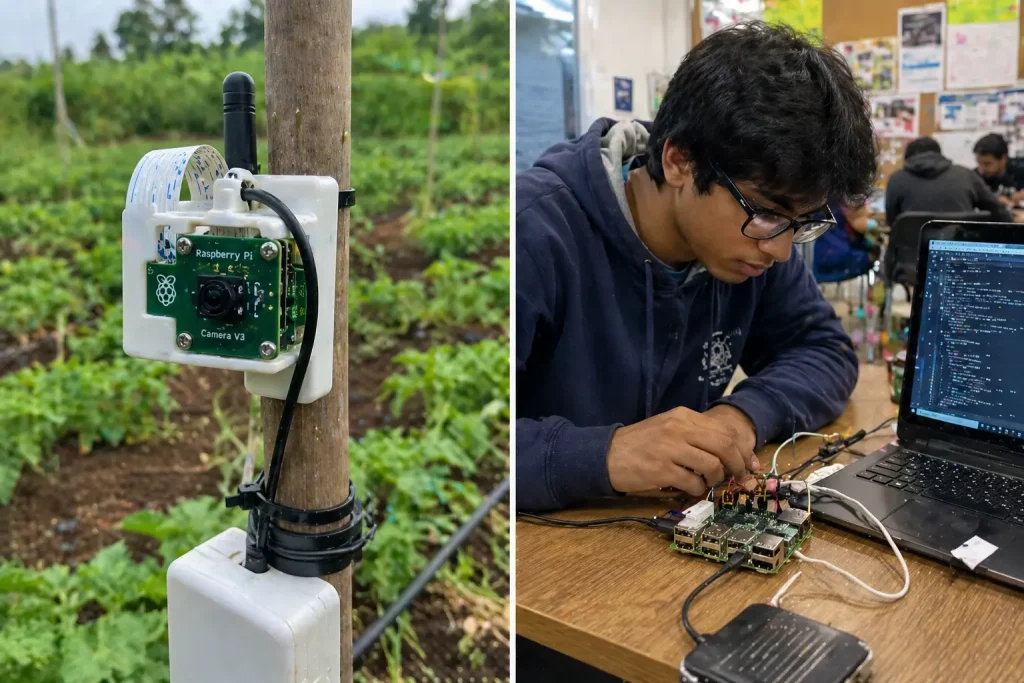
Agricultural sensors that monitor crop health, soil conditions, and irrigation systems for farmers with no reliable internet access. A camera connected to a Pi can flag plant problems before they’re even visible to the human eye.
Healthcare tools that track basic patient vitals in small clinics where cloud-connected medical devices aren’t accessible or affordable. It’s not replacing hospital infrastructure; it’s bringing a version of intelligent monitoring to places that currently have none.
Student AI labs are giving schools with limited budgets real hands-on experience with AI implementation, running actual models and building actual projects, not just reading about them.
Autonomous robots combining visual recognition, path planning, and object detection, all on a single compact board that fits in a bag.
Every one of these use cases shares something important: none of them needs the internet to work, all of them keep data local, and all of them run on hardware that costs less than most people spend on a phone.
Why It Matters
Cloud AI fails when the internet fails. Edge AI doesn’t.
For remote locations, sensitive environments, and anywhere connectivity is unpredictable, that reliability isn’t a feature; it’s the entire point.
Privacy is the other side of it. Every cloud AI interaction sends your data somewhere outside your control.
Edge AI on Raspberry Pi keeps everything local: your footage, your voice, your information never leaves the device. And underneath both of those sits the bigger argument worth making: AI doesn’t have to be expensive, centralised, or controlled by a handful of platforms to be genuinely useful.
A student in a small town with a ₹7,000 computer can build a working AI system today. A community clinic with no IT department can monitor patients intelligently. A farmer with no smartphone can have a system watching his crops. That shift, from AI as something owned by the few to something accessible to many, is slow and understated. But it is happening. And Raspberry Pi is one of the clearest examples of what it looks like in practice.
Conclusion
AI is getting bigger. It’s also quietly getting smaller.
The implementation of Raspberry Pi in AI is a quieter chapter in this story, one about intelligence that works when the internet doesn’t, keeps data private because it never sends it away, and costs what people can actually afford.
It doesn’t make headlines the way a billion-parameter model does. But in the places where it’s running and for the people who built it, it might be doing more useful work than anything in a data center.
The smaller version might be the one that reaches the most people.
